Seyed Fazel Shahcheragh
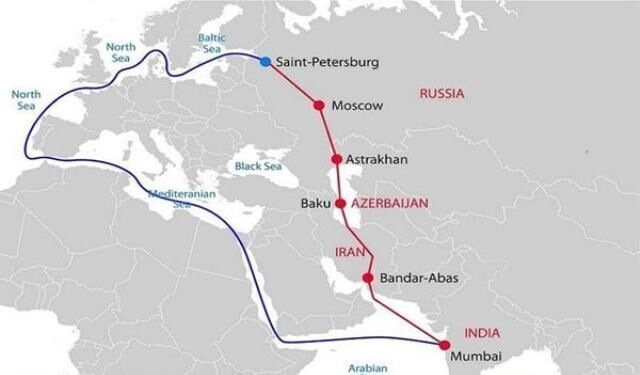
The International North-South Transport Corridor (INSTC), aimed at connecting India to Russia through Iran, presents a strategic opportunity for Iran to transform into the “Eurasian Transit Hub” and break free from economic isolation. This 7,200-kilometer corridor will reduce trade costs between India and Russia by up to 55%, and with the completion of projects such as the Rasht-Astara railway line and the underwater tunnel in the Persian Gulf, Iran’s transit revenue is expected to increase by approximately $1.5 billion by 2030. Additionally, the overlap of this corridor with China’s Belt and Road Initiative (BRI) and Russia’s support could help mitigate the impact of Western sanctions.
However, the success of the INSTC depends on regional stability, particularly in the Persian Gulf and the South Caucasus. Tensions between Azerbaijan and Armenia, security competition in the Persian Gulf, and the security challenges along Iran’s eastern borders with Afghanistan all increase the risks of investing in this project. Furthermore, competition from alternative corridors such as the “Middle Corridor” between Turkey and Azerbaijan and the China-Pakistan Economic Corridor (CPEC), along with Israel’s efforts to develop a competing route via the Haifa-UAE-India port, threatens Iran’s position. U.S. and EU sanctions also impact the participation of international companies in INSTC projects.
To fully capitalize on this opportunity, Iran must pursue an active diplomacy to reduce tensions with neighboring countries (such as Saudi Arabia), while simultaneously expanding its railway and port infrastructure (like Chabahar) and addressing domestic challenges such as institutional coordination and banking obstacles. The success of INSTC would not only make Iran the “logistical heart of Eurasia” but also strengthen its geopolitical balance in its confrontation with both the West and the East.
The full text of the article is available on Modern Diplomacy Website