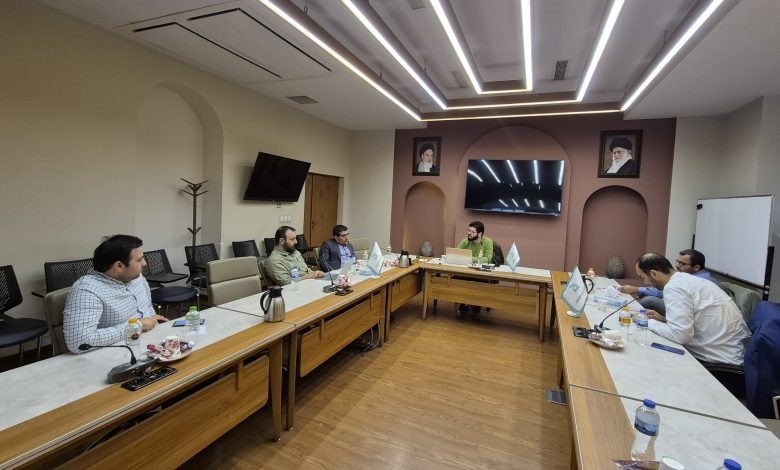
Report on the Session “Discussion and Analysis of the Contradictory Signals from the U.S. and the Management of the Trump Administration,” Hosted by KHANA.
The session “Discussion and Analysis of the Contradictory Signals from the U.S. and the Management of the Trump Administration” was held at the KHANA. The session featured the participation of Ali Salehian, Senior Researcher at Governance and policy Think Tank, Mehdi Kharatian, Director of the Revival of Politics Think Tank, and Hamzeh Amiri, ّFormer General Director of the Office of Studies, Monitoring, and Social Attachments at the Ministry of Interior.
The key topics discussed in this session were:
Both sides know that war comes at a high cost: Salehian argues that both Iran and the U.S. understand the high cost of war, especially after the killing of General Soleimani, and know it won’t bring quick results. He says Trump should realize that pressure alone on Iran doesn’t work, as shown during his first term. On negotiations, Iran has clear red lines: it denies using proxy forces, refuses to negotiate on its missile program due to national security, and believes the nuclear issue already has a defined framework. Currently, both sides seem to be using a “carrot and stick” approach. Trump thinks Iran is weaker now and wants to gain more from negotiations.
The U.S. will carry out military actions through Israel: Seyed Mohammad Sharifi stated that Israel is currently at war with Gaza, ignoring international laws, and no international body is intervening. He also noted that predicting the outcome of U.S.-Iran negotiations or military action against Iran is difficult, but if tensions rise, Israel, fully supported by the U.S., may engage in war with Iran. The U.S. would likely carry out any attack through Israel, using all its regional resources. Sharifi also dismissed claims that Iran’s air defense has been severely damaged, emphasizing its extensive capabilities.
Trump is seeking to create a new world order: Mehdi Kharatian stated that isolationist and economically motivated individuals have gained influence in Trump’s administration. He noted that Trump’s economic actions have been unprecedented, with significant drops in Wall Street and U.S. stock markets. A possible scenario is that the U.S., fearing an attack on Iran and rising oil prices, might engage with Iran for the next couple of months before deciding on its policy. Kharatian emphasized that the strength of U.S. technology companies has helped stabilize the economy, but concerns about inflation and GDP growth persist. He believes Iran must find a way to influence oil prices and have tools ready during crises.
We must pay attention to the emotions: We must consider public emotions and focus on national, especially economic, interests. The recent stabilization of prices, such as the decline in dollar and gold prices, is significant. We need to be mindful of public opinion and communicate effectively.
To read more, click here