
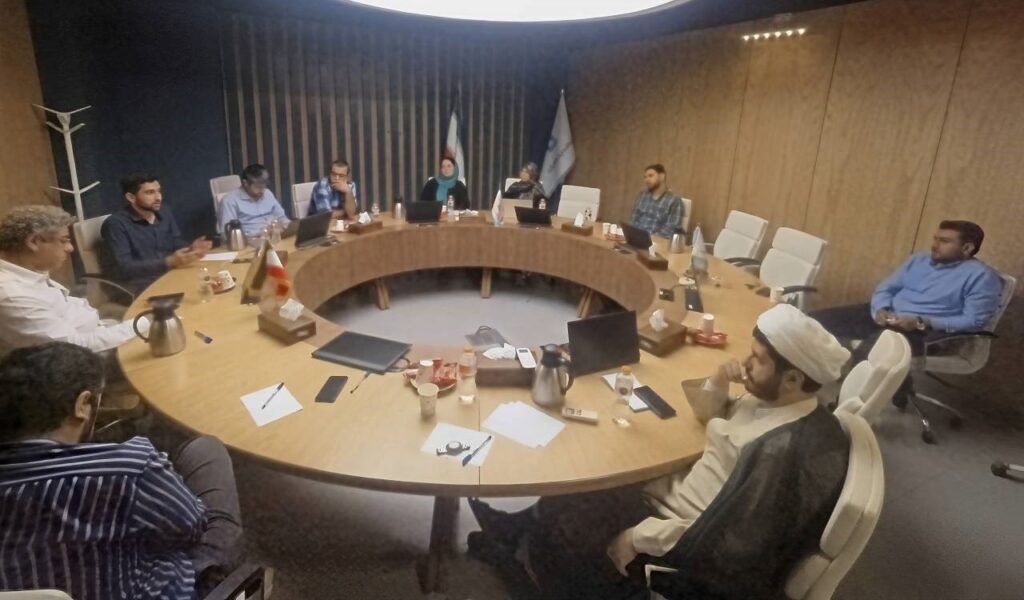
A Specialized Roundtable of Intellectuals with International Security Researcher Alam Saleh Held at KHANA
A closed expert session was held at KHANA, attended by a group of intellectuals and Alam Saleh, a scholar in international security. During the session, participants analyzed Iran’s domestic and foreign policies in response to the Zionist regime’s imposed war on Iran, explored possible scenarios and forthcoming challenges, and discussed strategies for effective crisis management.
A summary of the key points is presented below:
Today’s battle is not merely one of missiles and geography—it is, above all, a war of narratives
Iran’s absence from global media platforms means ceding the field to the enemy’s narrative. To counter this, Iran must adopt a multi-layered and targeted media strategy—one tailored to the audience, geography, and unfolding scenarios. The Iranian narrative must not only convey a message of resilience and steadfastness but also portray a rational, human, and legitimate image of the nation. While the military’s role in shaping this image is vital, it is not sufficient on its own. Political figures must also take an active media presence to reinforce the connection between the people and state, and to project an image of national unity. Without this, the military may become the sole perceived face of the Islamic Republic.
On the social front
The war begins in the minds of the people before it unfolds on the battlefield. Anxiety, uncertainty, and psychological attrition pose the greatest threats to national resilience. Therefore, preserving and strengthening social resilience is the most urgent responsibility of the state at this juncture. This resilience can be fostered by involving the public in social responsibilities, organizing psychological support for families, and reviving hope among children and youth—through the promotion of heroes, values, and shared national narratives. Simultaneously, the economy must be reviewed with a realistic, scenario-based approach, ensuring the continuity of production and distribution chains. While some sectors remain unaffected, disruptions in certain critical supplies could trigger crisis, and contingency planning is essential.
On the military front
Iran faces two options: achieving effective deterrence and strategic surprise, or being drawn into a prolonged, costly conflict. Analysts argue that showcasing Iran’s nuclear capabilities could have served as a preemptive deterrent and might have prevented the onset of war. Now, with U.S. involvement escalating tensions, Iran must adopt strategies that are both calculated and low-cost, yet maintain pressure. Initiating war by closing the Strait of Hormuz is seen as a high-risk and premature move. Instead, smarter measures must be employed to shift the timeline in Iran’s favor.
At the geopolitical level
The outlook for international support remains bleak. Europe, through its silence on Israeli aggression, has not only abandoned its historical role but has also forfeited its moral legitimacy. China and Russia are more likely to pursue their own strategic interests and maintain global balance rather than stand unequivocally with Iran. This realism compels Iran to focus inward—on self-reliance, national cohesion, and intelligent approaches in media, society, and military strategy. Long-term survival, ultimately, stems not from foreign support but from internal strength and unity.


