
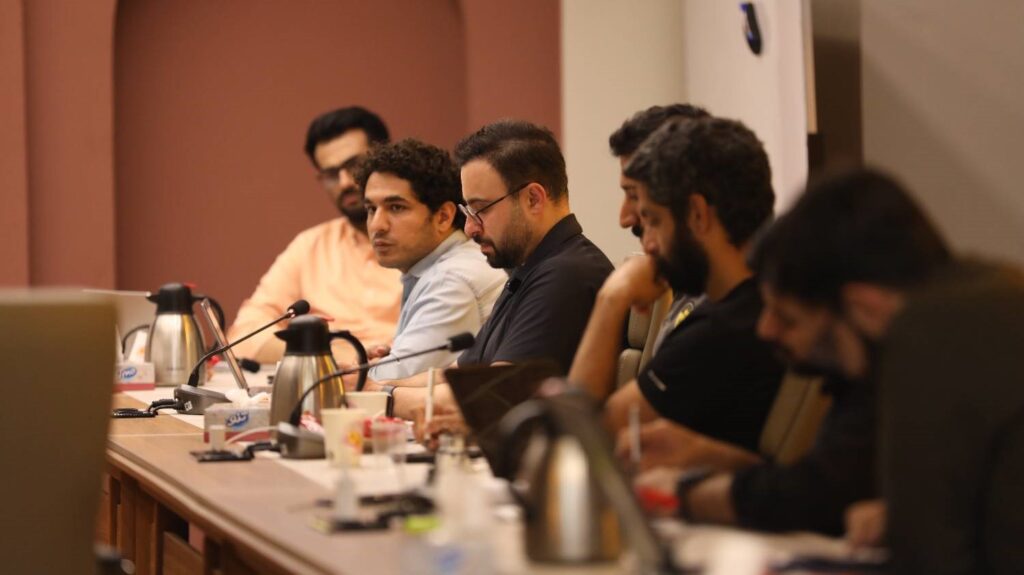
An expert panel titled “Socializing the War” held at KHANA
During the course of the war, the Participatory Governance Think Tank held an expert panel titled “Socializing the War” at KHANA, bringing together political, cultural, and social activists to share ideas and reflections relevant to that challenging period.
Mohsen Soleimani, researcher at Iranian Collaborative Governance Think Tank:
Small, seemingly simple acts like handing out syrup at a gas station line can create a spontaneous, kind domino effect that boosts morale during wartime.
Mohammadreza Jalaipour, political and social activist:
Despite internet and social media challenges, we are running a campaign called “Iran; National Solidarity, Homeland Defense” through domestic platforms and VOD services.
Hossein Haghpanaah, editor of the “Eshareh” program on Omid Network:
We should bring teenagers into activism. Adolescents need to appear on the scene and say, “I am alive and living,” making life itself the focus of their activism.
Ebrahim Nourmohammadi, social activist:
Media is not limited to virtual platforms and news channels; it can also manifest as field action in local neighborhoods.
Mehdi Bazrafshan, Sampad coach and cultural activist:
We must revive the wartime rituals. For example, during the war, the phrase “Don’t say it!” was common to prevent information leakage to the enemy—similar to today’s “I don’t know” campaign.
Seyed Hassan Mousavi-Fard, former secretary of the Justice-Seeking Student Movement:
We must utilize social activism and community management. Although people are stuck in traffic or gas lines, there isn’t even a single case of fighting or conflict.
Service platforms should expand and provide wider coverage.
Mojtaba Farhang, director of Culture and Creative Industries Think Tank
We should tap into unused communication capacities—for example, speak to Generation Z in the language of their values. If nationalism is important to them, engage them in dialogue in that context.
To read more, click here


