A legal analysis of Israel’s military attack on Iran from the perspectives of the UN Charter, humanitarian law, and the legitimacy of preemptive self-defense
Abstract
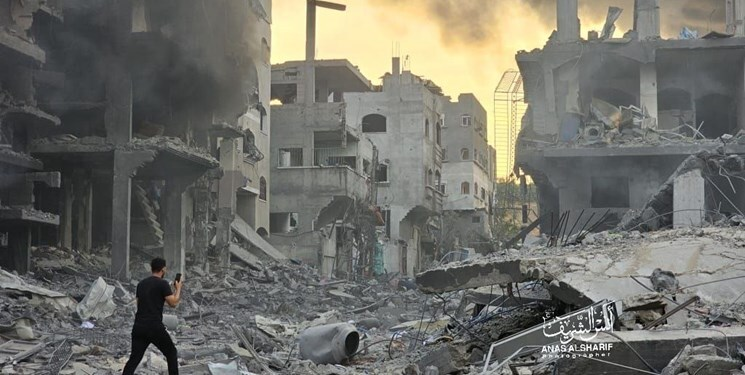
Israel’s Recent Military Attack on the Territory of the Islamic Republic of Iran, which resulted in the deaths of several civilians and the destruction of urban infrastructure, has sparked strong reactions under international law.
Israel has justified this action as a form of “preemptive self-defense” against alleged threats from Iran. This article critically analyzes the legitimacy of such a justification in light of the provisions of the UN Charter, the jurisprudence of the International Court of Justice (ICJ), and the principles of international humanitarian law and international human rights law.
Finally, it offers recommendations for legal actions Iran can pursue in international forums. In June 2025, a military strike by the Israeli regime targeted Iranian territory without presenting any concrete evidence of an imminent threat or attack from Iran, and resulted in significant civilian casualties. Israel framed this act as a “defensive preemptive strike,” despite the fact that under international law, the use of force without UN Security Council authorization—except in highly limited and conditional cases of self-defense—is explicitly prohibited.
In this article you also read about:
Legal Analysis of Israel’s Military Attack on Iran
Prohibition on the Use of Force – Article 2(4) of the UN Charter
Article 2(4) prohibits the use of force in international relations, except in cases of self-defense or with Security Council authorization. Israel’s attack lacked such authorization, making it a violation of this fundamental principle.
Self-Defense in International Law – Article 51 of the UN Charter
Self-defense is only permitted in response to an actual armed attack and must be reported immediately to the Security Council. No armed attack by Iran occurred, nor has Israel provided credible evidence of an imminent threat.
Critique of the Doctrine of Preemptive Defense
Preemptive defense is not recognized under international law unless the threat is immediate, unavoidable, and the response is necessary and proportionate (Caroline Test). Israel’s strike did not meet these criteria and is therefore unlawful.
Violation of International Humanitarian Law (IHL)
IHL requires distinction between military targets and civilians, proportionality, and precaution. Civilian casualties, including women and children, suggest these principles were violated—potentially constituting a war crime under the Rome Statute.
Violation of International Human Rights Law
The right to life under Article 6 of the ICCPR is non-derogable, even during conflict. An unprovoked attack without Security Council approval that results in civilian deaths constitutes a clear violation of this right.
Legal and Political Consequences
Ignoring such actions weakens the international legal order. Accepting preemptive self-defense legitimizes proactive use of force and threatens the UN Charter–based system.
Legal Recommendations for Iran
- Request emergency Security Council and General Assembly sessions under “Uniting for Peace.”
- Report to the UN Human Rights Council.
- Engage regional and international civil and humanitarian bodies to expose violations.
The legal analysis of Israel’s attack on Iran shows that this attack is in no way justifiable under international law. The doctrine of preemptive self-defense lacks the necessary legal basis and has no place within customary or treaty law. Such actions must be immediately condemned by the international community and prevented from recurring. The Islamic Republic of Iran should also utilize all its available international legal mechanisms to uphold the rights of its people and defend the principles of the United Nations Charter.
This study was conducted by Morteza Abdi, Director of Institute for Strategic Studies of International Law in 2025.
To read more, click here