Analytical Note by Institute for studies of contemporary world on Israel’s Policies toward the Druze — from Mandatory Military Service to Structural Discrimination
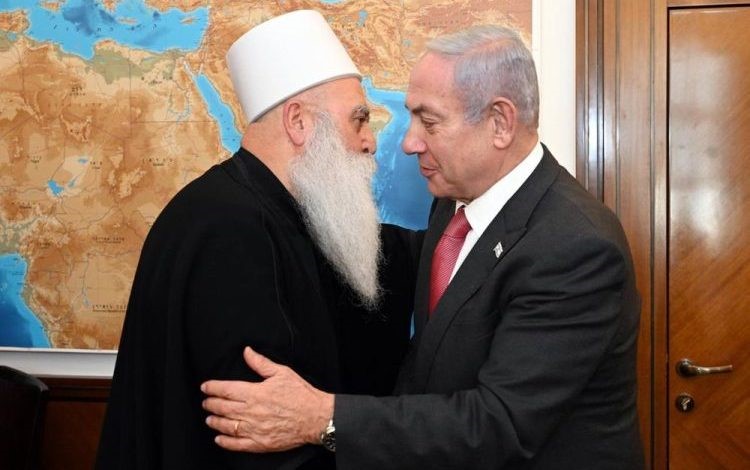
Israel, as an artificial regime with a small population and a fragile socio-political structure, has consistently sought to manage relations with its diverse minority groups. The Druze, as one of Israel’s key minorities, have been at the center of these policies due to their distinct cultural and social characteristics.
The Druze community in Israel numbers around 150,000 and is primarily concentrated in the Carmel, Galilee, and Golan regions. Originating in 11th-century Egypt, this closed society—marked by strict endogamy—maintains an identity distinct from other minorities, especially Arabs.
Since its establishment, Israel has designed policies to manage minorities, particularly the Druze, with the aim of separating them from Arab identity and aligning them more closely with Jewish society. Tools for this strategy have included mandatory military service and a separate educational system for Druze.
Israel’s relationship with the Druze dates back to the 1930s, when it began portraying them as distinct from Arabs. This approach peaked in 1962 when Druze were officially recognized as a separate nationality, further institutionalizing their identity separation. The creation of a special Druze education department in 1976 and the introduction of compulsory military service for Druze were also part of this strategy. Ostensibly, these measures aimed to preserve Druze culture and integrate them into Israeli society, but in practice, they served to distance them from Arabs and strengthen their ties with the Jewish community.
Military service has played a central role in this process, allowing Druze to gain social standing among Jews. However, this integration has been incomplete. For example, after the Hamas attacks in October 2023, over 430 Druze soldiers were killed in the Israeli army, reflecting their significant military presence, yet structural discrimination persists.
Despite seemingly supportive policies, Druze continue to face discrimination from Jewish society. According to Said Naffaa, a Druze member of the Israeli parliament, military service has not secured equal rights for Druze citizens. Employment challenges, high rents in Jewish-majority areas, and social discrimination remain major issues.
Beyond its borders, Israel has used Druze communities—particularly in Syria—as political leverage. After the occupation of the Golan Heights, Israel implemented similar policies toward Syrian Druze, but unlike Palestinian Druze, they maintained their Syrian identity and rejected Israeli overtures.
Recently, the Israeli regime has sought to expand its influence by supporting Druze in Sweida against Syria’s new government, offering incentives such as work permits in Israel. These efforts—especially amid recent tensions in Damascus’s Jaramana neighborhood—reflect Israel’s strategy to destabilize Syria through the instrumental use of Druze communities.
At the regional level, leveraging Druze populations to destabilize Syria represents a strategic yet risky approach for Israel, one that could carry negative consequences for regional stability.
This study was conducted by Ahmad PourAhmadi in 2025.
To read more, click here