
What emerged after the “Ramadan War” in Iran defied expectations, significantly strengthening national morale and social cohesion. This renewed unity once again demonstrated Iran’s cohesive national power in countering unilateralism and the overreach of the U.S. and Israel.
The Third Sacred Defense: Iran’s National Unity and Strategic Deterrence After the Ramadan War
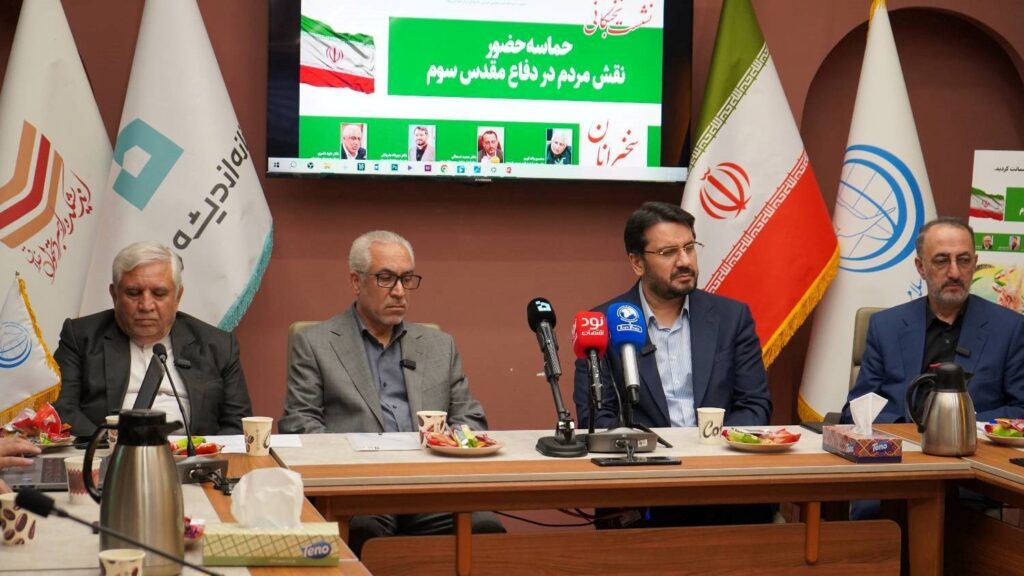
The third seminar on “The Epic of Presence and the People’s Role in the Sacred Defense,” organized by the World Assembly for Peace, the Think Tank for Transformation Strategy, and KHANA, explored this dynamic. Former Minister of Roads Dr. Mehrdad Bazr-Pash highlighted how popular presence neutralized enemy plans to alter public perception, turning the Strait of Hormuz into a potent deterrence tool. Former Ambassador Dr. Mohsen Pak-a’in former Ambassador of Iran to the Republic of Azerbaijan, noted that internal solidarity thwarted foreign attempts to discredit the Islamic system. Dr. Mohammad Eshaghi described the people’s participation as a strategic, almost divine mandate that disrupted enemy military formations. Dr. Davood Amiri, Secretary-General of the World Assembly for Peace, argued that Iran is experiencing a “Third Revolution,” where the combination of national passion and religious consciousness represents a broader struggle against global unilateralism, ensuring the defense of justice and humanistic values.
If you would like to read more about the Ramadan War and its strategic implications, visit our Publications page


