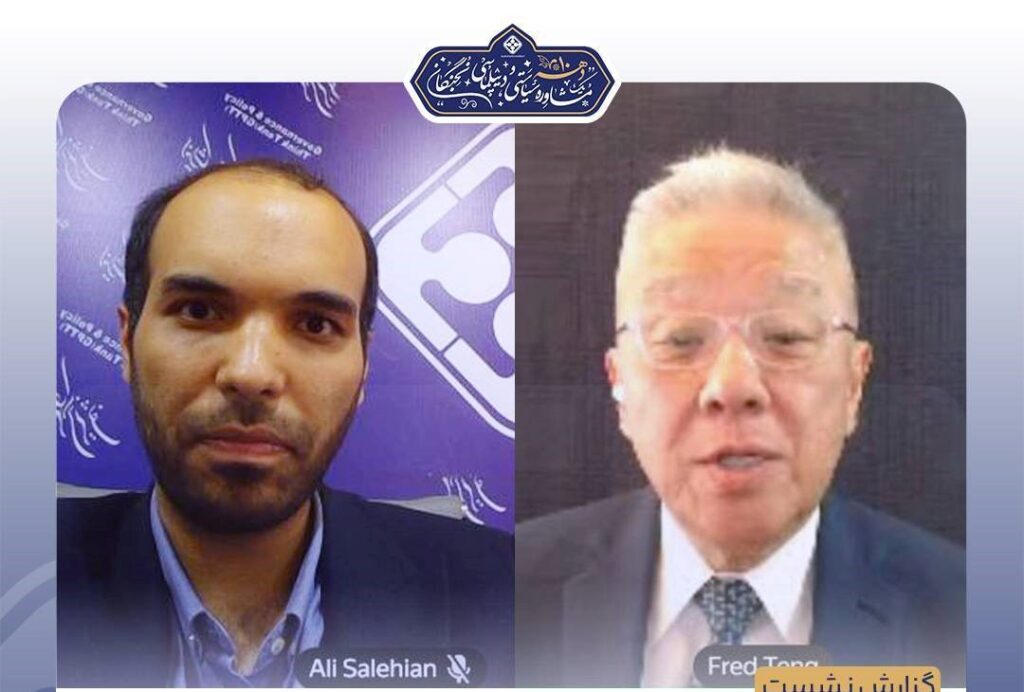
In a recent dialogue hosted by the Sharif Governance Think Tank, Ali Salehian, Head of the International Department, engaged with Fred Teng, Founder of the “US-China Public Relations” Institute, to dissect the strategic implications of Donald Trump’s visit to China and his meeting with President Xi Jinping.
Trump and Xi Meeting Highlights China’s Strategy for Global Peace and Economic Power
Teng posited that peace is an inseparable component of China’s political identity. He described Trump’s reception by children waving dual flags as a symbolic assertion that China views the future of the world through the lens of peace and the next generation. While recent emphasis on Taiwan serves to draw red lines and prevent military confrontation, Teng stressed that maintaining constant diplomatic communication is crucial in this volatile landscape.
China’s stance on global conflicts remains consistent: an immediate call for ceasefires and a push for negotiation. Teng drew a parallel between Iran’s strategic use of the Strait of Hormuz and China’s approach to the ongoing trade war. Just as Iran leverages geographical chokepoints, China utilizes its dominance in rare earth minerals and agricultural purchases (such as soybeans) as economic countermeasures against US tariffs.
China’s logic prioritizes national interest during peacetime
China’s foreign policy strategy follows a clear trajectory: first, accumulate sufficient economic wealth; second, build military power; and third, project national interests abroad. In the contemporary world, Teng concluded, power is the sole determinant of foreign policy. For Iran; acquiring power and maintaining national unity is vital.