
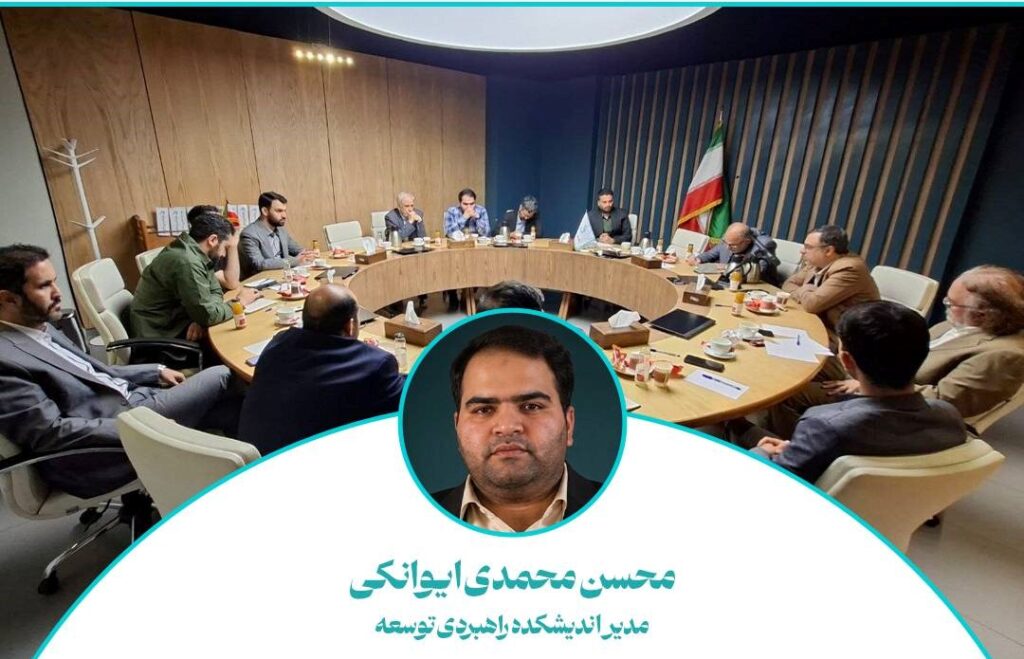
Mohsen Mohammadi Ivanaki: War as a turning point in economic and industrial development
Major crises and post-war periods are not merely times of destruction and economic loss. They can also become critical turning points for rethinking development strategies and rebuilding industrial structures. The experiences of countries such as Japan, South Korea, and Taiwan demonstrate that crises lead to industrial transformation only when they are accompanied by institution-building, effective state coordination, and the strategic selection of national growth engines.
Iran’s industrial challenge is not simply a lack of capacity or insufficient industrial diversity. Compared with its Persian Gulf neighbors, Iran possesses a relatively diversified industrial base. However, this diversity is concentrated largely in the lower segments of value chains and has not translated into the production of complex products, advanced technologies, or high-value-added industries. This condition can be described as “poor industrial diversification.”
Reconstructing Iran’s Industrial Future: Four Strategic Priorities
Overcoming this challenge requires industrial reconstruction at four interconnected levels:
- Ensuring the survival and stability of industries during periods of crisis and uncertainty.
- Rebuilding state capacity and restoring the government’s coordination capabilities, particularly in directing the banking system and facilitating cross-sectoral cooperation.
- Driving structural transformation toward heavy and strategic industries that can enhance national competitiveness and technological capability.
- Improving resource efficiency, especially in the consumption of energy, fuel, and critical inputs.
Within this framework, industrial policy should move beyond fragmented and small-scale support measures and embrace a strategy of “backing the winners.” This means concentrating the country’s strategic resources on large-scale, competitive private enterprises rather than dispersing them across numerous small experimental projects.
Kiomars Ashtarian: A shift from mass governance to national capitalism
Kiomars Ashtarian stated that Iran’s industrial development problem is less about industry selection than governance structure. He argued that mass-based administration distributes fragmented permits, subsidies, and rents across small inefficient units, causing disorder and weakened production chains. He proposed national capitalism with large accountable private consortia integrating production networks, reducing intermediaries, and implementing public policies, while the state acts as regulator and coordinator rather than direct intervener in Iran.
Saber Mirzaei: A wealth-creating industry should take the place of a job-creating industry
Saber Mirzaei, advisor at the Presidential Center for Transformation and Progress, stated that Iran must move beyond an inward-looking approach and redefine its role based on geography and regional capacity. He argued that Iran should position itself as a strategic transit hub in the global economy, requiring large-scale infrastructure such as deep-sea ports and mega-ports. Mirzaei also emphasized cross-border value chains, noting the importance of regional resources. He asserted that industrial policy should shift from job creation toward wealth creation through capital-intensive and knowledge-based industries.
You can read more about Ramadan War and its consequences for Iran and the other countries on our publications.


