Jeff Schubert, Professor at Irkutsk National Research Technical University, Russia
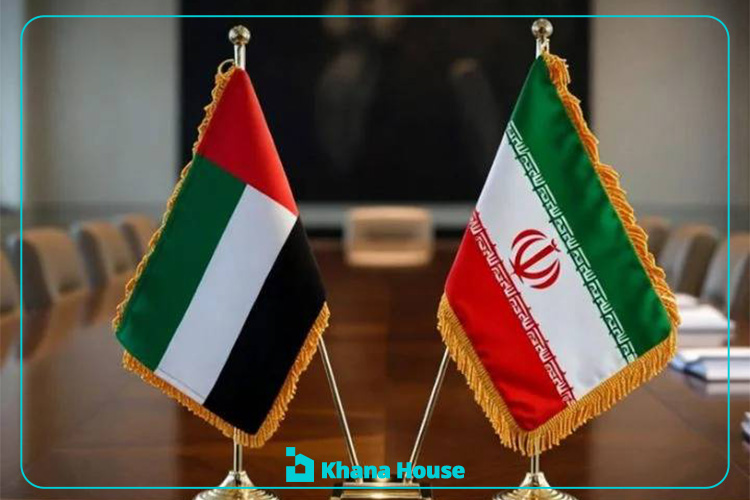
“The UAE’s bold gambit on Iran” article in the Financial Times (28 July), by Andrew England and Nicolas Parasie, describes how the United Arab Emirates is now cosying up to Iran in commercial (and even diplomatic) terms while also strengthening its security relationships with Israel and the USA. This pragmatic approach reflects the fact that the UAE is “hostage to geography” and that the war is “not going to end the regime” or see the end of the Islamic Republican Guard Corps (IRGC).
While the UAE was heavily attacked by Iran missiles in the first months of the war these have now eased off as both countries look to the future.
Some direct flights between Dubai (“home to several hundred thousand Iranians”) and Tehran have resumed. “Iran has a big population, a big consumer market, and certainly a huge benefit for Dubai as its trading and re-export hub,” says a Dubai official. “It’s very important for us in terms of going back to a normal relationship.” “Emiratis say there is an appetite to invest in the country, particularly in energy, ports and logistics, if the war were permanently ended and US and international sanctions scrapped.”
As myself and Mohsen Abdollahzadeh wrote in a paper for a July 14 conference in Tehran (see link below), the Iranian economy has enormous potential and already has “many of the aspects of a Western-type market structure.” Our report examined the lessons that Iran can learn from the successful “Made in China 2025” program and from successes and failures of the Russian economy over the last few decades.
We concluded that “Iran is presently wasting its economic potential as well as its potential world influence in terms of both hard and soft power. Iran plays the influence and power game in a limited and short-sighted way but its policy makers could learn a lot from China which understands the bigger truth that economics is the main game. Even if power ‘grows out of the barrel of a gun’, the effectiveness of that gun depends on industrial and technological development.”
My view is that the war has guaranteed that Iran will pursue a nuclear weapon and that Israeli and United States can at best delay this process. Unlike the UAE, neither Russia nor China see Iran as a threat and will have little incentive to see its power constrained.
See report, “Lessons from CHINA and RUSSIA for IRAN’s Post-War Economic Reconstruction”, Sharif Policy Research Institute (SPRI), Sharif University of Technology (SUT), Tehran, 14 July 2026: