Research institute of Strategic Studies
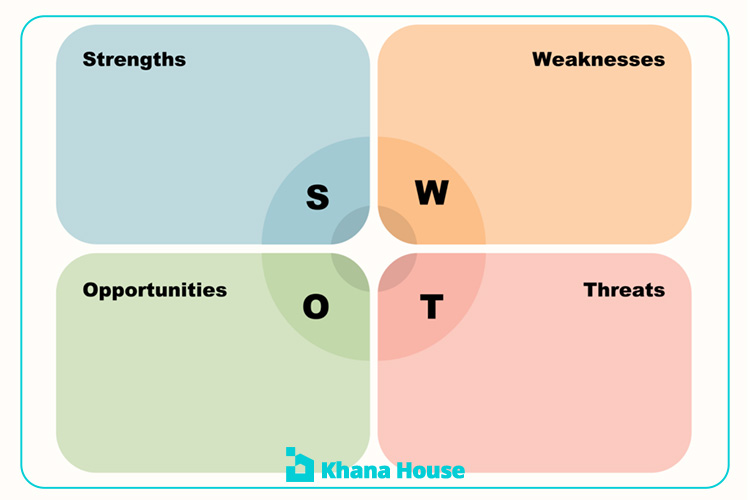
The SWOT framework was originally designed for business planning and is ill-suited for analyzing foreign policy and national security. Unlike business environments, security and geopolitics involve dynamic power competition, uncertainty, and adversaries that continuously adapt. SWOT reduces these complexities to a static four-quadrant model, making it inadequate for strategic decision-making.
Why SWOT Fails in Geopolitical and National Security Analysis?
SWOT fails to prioritize threats, ignores the time dimension, overlooks the behavior of intelligent opponents, and often creates a false sense of analytical certainty. Instead of supporting sound judgments, it can encourage indecision and oversimplification.
Organizations such as NATO and the U.S. intelligence community rely on more advanced methods, including scenario planning, red teaming, competing hypotheses analysis, strategic foresight, and decision gaming. While SWOT may serve as a preliminary tool for organizing information, it should not be used as the primary framework for national security or geopolitical analysis.