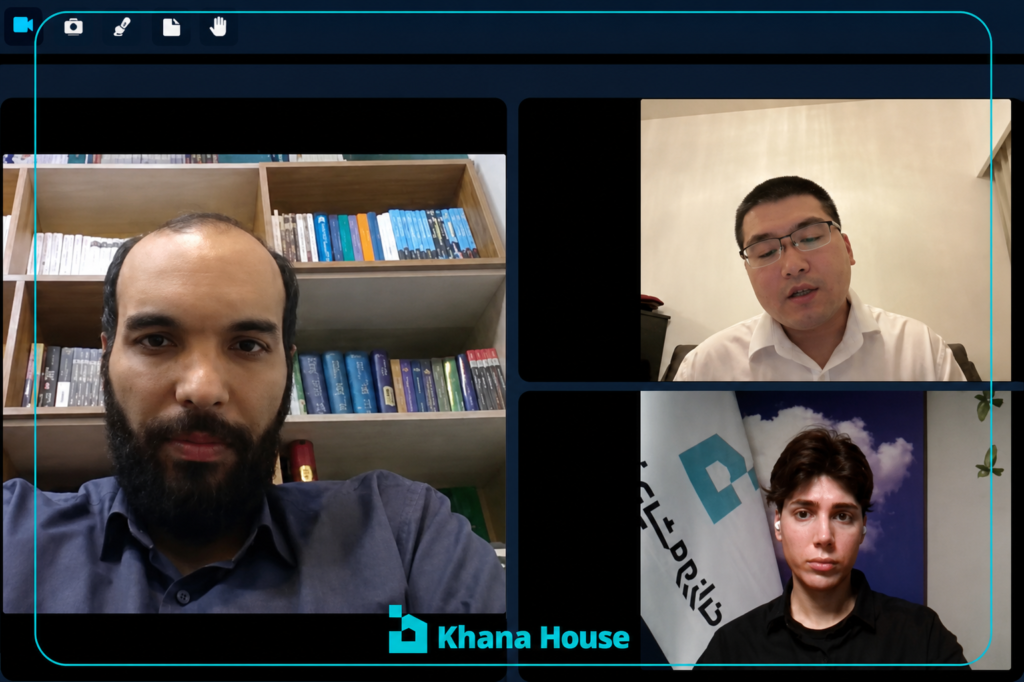
As part of the ongoing webinar series “Iran’s Post-War Economic Reconstruction,” organized by Khana House, this session featured Dr. Brian Wong, DPhil in Politics, University of Oxford; HKU-100 Assistant Professor in Philosophy; Director, Hong Kong Global AI Governance Hub; Fellow, Centre on Contemporary China and the World as the keynote speaker.
Overview
Dr. Wong’s talk examined how the trajectory of China’s reform and opening-up — characterized by sequenced market liberalization guided by an activist, capacity-building state — offers practical lessons for Iran’s post-war reconstruction. He framed China’s political model as intentionally responsive and performance-oriented rather than organized around electoral democracy, arguing that this orientation enabled rapid infrastructure rollout, coherent industrial policy, and social stability, while prioritizing pragmatic self-sufficiency and resource resilience through strategic stocks, domestic supplier development, and supply-chain diversification.
Key Themes
State-guided liberalization: How a capacity-building, activist state can sequence market reforms to balance growth with stability — a model with direct relevance to a reconstructing economy facing structural constraints.
Performance-oriented governance: An examination of China’s governance logic as rooted in outcomes and institutional responsiveness, offering an alternative reference point distinct from Western electoral frameworks.
Resource resilience and self-sufficiency: Strategic stockpiling, domestic supplier ecosystems, and supply-chain diversification as tools for reducing external vulnerability — themes with clear applicability to Iran’s post-sanctions, post-war context.
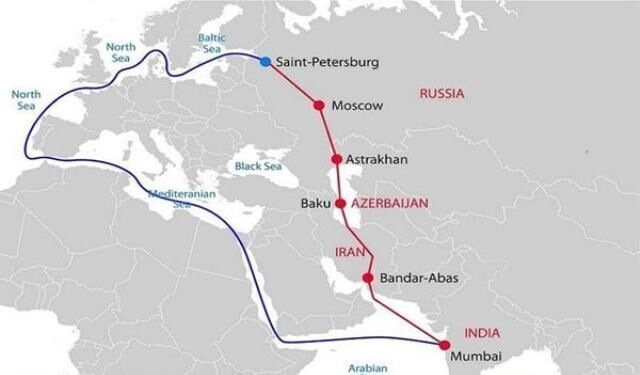
BRICS+ and re-globalisation: Dr. Wong explored how a BRICS+ architecture — through investment, alternative financing mechanisms, technology transfer, trade linkages, and infrastructure corridors — could support a re-globalisation framework conducive to reconstruction, resilience, and regional integration.
Constraints and caveats: The talk closed by addressing the governance, geopolitical, and legal constraints likely to shape the scope and pace of any such engagement, offering a grounded rather than idealized reading of China-Iran-BRICS+ cooperation.
Dr. Brian Wong examines China’s political economy and reform trajectory since 1978, arguing that understanding China requires attention to its heterogeneity, contextuality, and practicality — with many reforms emerging through localized experimentation before scaling nationwide. He describes China’s governance model as built on performance legitimacy, meritocratic promotion, and central-local coordination, deriving legitimacy from growth and stability rather than elections. From this, Wong draws five lessons for developing economies: investing in human capital, strengthening institutions, building supply-side resilience, encouraging experimentation, and promoting transparency and sustainability — cautioning that China’s model should be adapted, not copied wholesale.
The session situated Iran’s reconstruction challenge within a broader comparative and structural frame, moving beyond a narrow economic lens to engage questions of political model, institutional design, and global order. By linking China’s domestic development experience to the emerging BRICS+ architecture, Dr. Wong offered participants a framework for thinking about reconstruction not as an isolated national project, but as one embedded in shifting patterns of global economic and geopolitical realignment.