Dr. Brian Wong, DPhil in Politics at the University of Oxford, HKU-100 Assistant Professor in Philosophy, Director of Hong Kong Global AI Governance Hub and Fellow at Centre on Contemporary China and the World, HKU

Overview
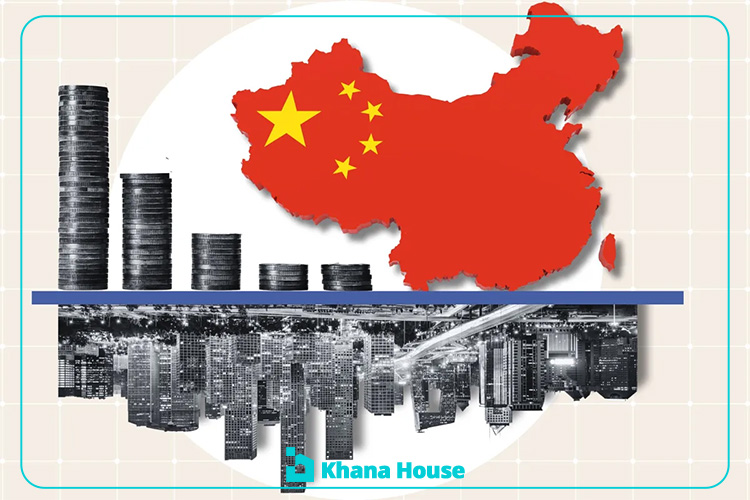
Any serious assessment of China must begin from three foundational characteristics: heterogeneity, contextuality, and practicality. These three “-ity”s frame not only how China should be studied, but how its reform trajectory since 1978 should be understood.
I. Three Lenses on China
Heterogeneity. China is a country of stark internal contrasts — coastal megacities beside interior rural townships, frontier AI and biotech firms operating alongside low-margin informal workshops. Generalizations about “China” require constant qualification: what is true of Shenzhen is often untrue of a tier-two city in Sichuan.
Contextuality. China’s political economy cannot be understood in isolation from the global system. The 1978 reforms unfolded within the legacies of planned socialism, the pressures of the late Cold War, and the subsequent wave of globalization — with industrial policy, technology acquisition, and financial opening all shaped by external constraints and opportunities.
Practicality. Reform in China has been driven less by ideology than by pragmatic problem-solving. From the household responsibility system to Special Economic Zones, major changes typically began as localized experiments — tested, adjusted, and only scaled up once proven effective.
II. Governance as a Responsiveness System
China’s governance model is built on performance legitimacy — the idea that the ruling party’s authority rests on its ability to deliver growth, stability, and national strength, rather than on electoral competition. Key institutional features include:
- Meritocratic cadre promotion within single-party governance, with officials evaluated on growth, investment, poverty reduction, and increasingly environmental and social outcomes.
- Central coordination paired with local experimentalism — the well-known “pilot zone” model, where reforms are tested regionally before national rollout.
- The “mayor economy” — drawing on Daniel Bell’s “three-layered cake” metaphor and Keyu Jin’s work, city and provincial leaders compete to attract investment and meet centrally defined targets, though this ideal type doesn’t fully capture on-the-ground complexity.
Responsiveness, emerges not from elections but from performance targets, rapid mobilization capacity, and consultative networks of business associations, think tanks, and academics. This system has delivered scale and stability, but carries real risks: constrained pluralism, weaker external accountability, and susceptibility to corruption and policy capture.
III. Five Takeaways — HISET
5 lessons for other developing economies:
- Human capital — sustained investment in education, technical training, and talent retention as the most durable driver of long-term development.
- Institutional capacity — building planning agencies, procurement systems, and evaluation mechanisms before scaling major projects.
- Supply-side resilience — cultivating domestic suppliers, strategic stockpiles, and diversified imports alongside manufacturing growth.
- Economic experimentation — phased, tolerant-of-failure policy environments that allow successful models to be identified and scaled.
- Transparency and sustainability — embedding anti-corruption measures, environmental standards, and inclusive social policy into governance as growth matures.
Conclusion
Central argument is that China’s political economy since 1978 reflects a heterogeneous society governed by a contextual, performance-oriented system — one built on meritocratic bureaucracy and experimentation rather than electoral politics. The value for other countries, he suggested, lies not in copying China’s model wholesale, but in extracting its underlying lessons on human capital, institutions, resilience and sustainable governance.