
Dr. Mehdi Sanaei’s Account of Establishing the Secretariat for Administrative Foresight and Innovation in the 13th Administration
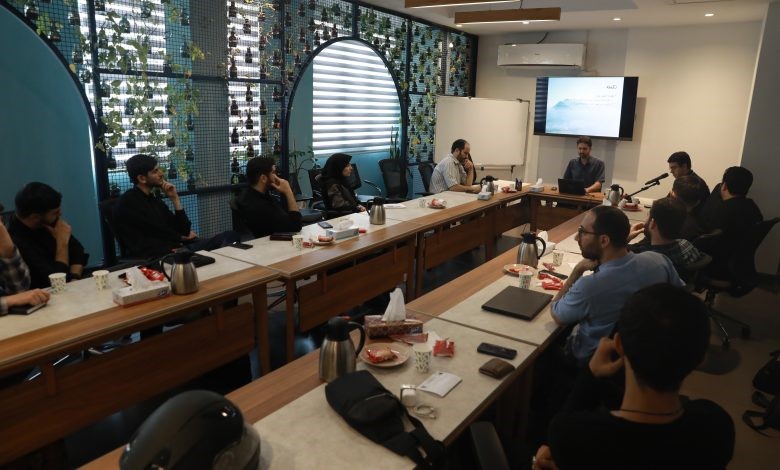
The first session in the “Government of Experience” series—focusing on revisiting governance and policy-making experiences of the country’s thought leaders—was held on July 29, 2025, at its headquarters. Dr. Mehdi Sanaei, founder of the “Transparency for Iran” think tank and former Director-General of the Secretariat for Administrative Foresight and Innovation (DANA) at the Administrative and Recruitment Organization, was the keynote speaker. He shared his experience in establishing the Secretariat during the 13th Administration and explained the role of think tanks in improving governance.
From Think Tank to Organization: The Story of DANA’s Formation to Strengthen Policy Research in the Administrative System
Dr. Mehdi Sanaei explained that collaboration with the Administrative and Recruitment Organization began in 2021, rooted in earlier work at the “Transparency for Iran” think tank. Initially serving as an advisor, he realized that meaningful reform needed more than a few individuals. This led to the idea of connecting think tank capacities with formal administrative structures. With support from the new head of the organization, the Secretariat for Administrative Foresight and Innovation (DANA) was established to enhance cooperation between the organization and external policy experts.
The Secretariat as a Bridge Between the Organization and External Capacities
Sanaei emphasized that research must be problem-driven and directly aligned with the organization’s needs. A structured process was created where each project had a senior official as a sponsor. A “SHENAVA” (Needs and Expectations Summary) document helped clarify problems. Regular meetings between researchers and managers ensured relevance. DANA aimed not to produce all solutions internally but to act as a facilitator linking the organization with external expertise.
Think Tanks as Partners in Improving Governance
He noted that while not all goals were achieved, DANA successfully laid the groundwork for collaborative governance through platforms like the participatory policy-writing system. Though technical and financial constraints remained, DANA showed that even under limited conditions, institutional innovation is possible. Financial support came through flexible budgeting mechanisms, with advance payments helping think tanks focus on quality over administrative burdens.
Differences Between Universities and Think Tanks in Research Funding
Sanaei explained that think tanks operate on project-based models with limited resources, unlike universities where faculty have steady salaries. This difference required redefining expectations and clarifying research cost structures to reduce misunderstandings. DANA also invested in physical and cultural infrastructure—like innovation centers and libraries—to promote collaboration, though some of these were later dismantled after leadership changes.
Think Tanks Can Play a Stronger Role in Supporting Government
He highlighted efforts to shift the organization’s mindset from being a problem-solver to becoming a platform for solving problems. Younger managers were more open to this idea, while traditional structures showed resistance. Universities, though academically credible, often lacked engagement with practical policy issues, making think tanks better positioned—if their ties to executive bodies remained strong.


