
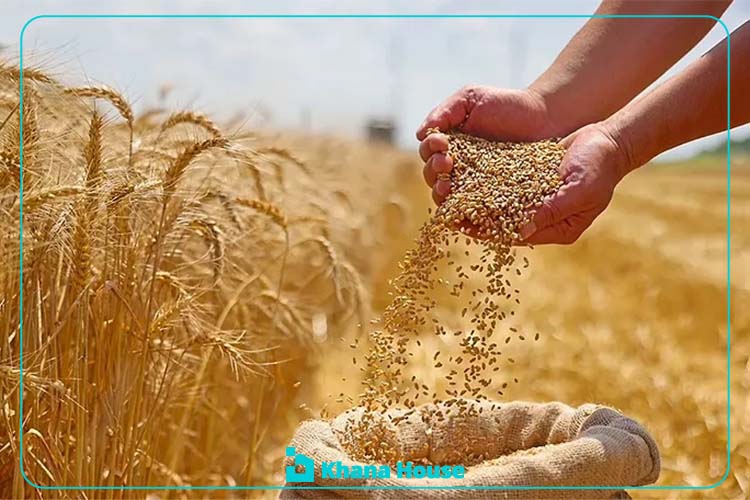
In recent years, the concept of “food security” has undergone a significant transformation in the global politics and security discourse. While it has traditionally defined as stable access to sufficient, safe, and nutritious food, geopolitical shifts, climate crises, and the exploitation of natural resources have led to the emergence of a new phenomenon: “food as a weapon.”
This means food is no longer merely an economic commodity or a human need, but a tool for political pressure, population control, and even warfare, as evidenced by the severe food restrictions in Gaza during the recent conflict, labeled by many international bodies as “starvation as a weapon.” In this context, food security has become a strategic issue in global politics, necessitating a new discourse where food serves as a means for cooperation, stability, and peace.
Regional Challenges and Iran’s Opportunity
The West Asia region, including Persian Gulf states and Iran, faces shared food security vulnerabilities like import dependency, climate change impacts, and water scarcity. This common challenge creates an opportunity for Iran to lead a “food diplomacy” initiative.
Iran’s Potential as a Regional Food Hub
Iran’s strategic geography, diverse agricultural capacity, industrial infrastructure, and critical transit routes (like the Strait of Hormuz and North-South Corridor) position it as an ideal “regional food hub.” It can shorten supply chains, process food, and serve as a distribution center. This potential can lead to a “Regional Food Security Pact,” fostering joint investments, strategic reserves, and technological cooperation. By transforming food from a tool of conflict into a foundation for cooperation, Iran can enhance regional stability and trust, offering a new narrative for shared peace and development.
This policy note is written by Keshtban Food Policy Think Tank in 2026.
To read more, download full paper


