
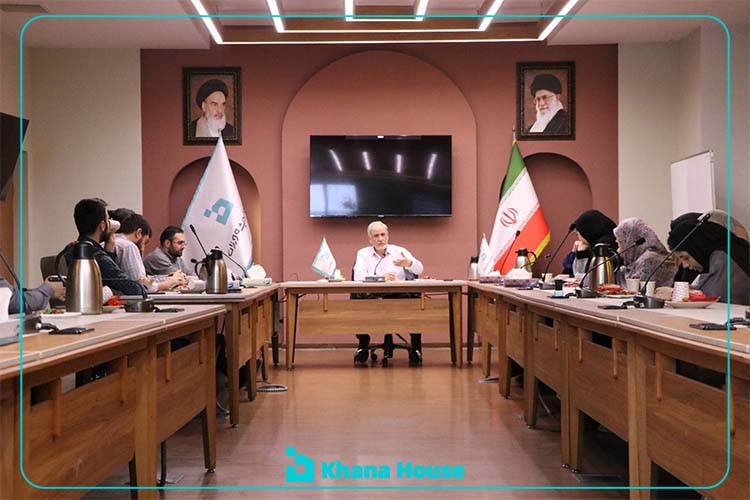
Mr. Saber Mirzaei, Deputy of Research and Development at the Center for Cooperation, discussed the historical roots of conflicts, Iran’s defensive capabilities, and economic challenges.
Historical Roots Not as Past, but as “Structural Deterrents“
The focus is on the U.S. behavioral pattern of refusing formal concessions, illustrated by its hasty withdrawals from Vietnam and Afghanistan, and Israel’s retreat from Lebanon. This refusal stems from internal limits within the U.S. decision-making system influenced by powerful lobbies that render any formal concession politically costly.
The Riddle of Iran’s Deterrence: Between Missiles and Livelihood
An unbreakable link between national security and economic welfare is emphasized. Iran’s pursuit of missile self-sufficiency is seen as crucial for exerting deterrence and influencing global dynamics. However, there is a concern that military power needs to address livelihood issues to maintain social backing.
The Strait of Hormuz Not Only as a Threat but as a “Financial Order Disruptor”
The analysis extends beyond oil transit disruption to potential crises more severe than that of 2008, complicating U.S. responses. This positions Iran as an accelerator of the collapse of the current financial order, reflecting a transition from unipolar to multipolar dynamics.
Future Outlook: Not a Linear Prediction, but a Scenario of Discontinuous Transformation
The critical question shifts from “What will America do?” to whether the decline of U.S. hegemony has reached a point where regional reactions are engines of transition. Iran’s active resistance becomes a structural position that can serve as a deterrent, a catalyst for collapse, and a foundation for a new non-Western order.
You can also read about other points related to Ramadan war on our publications.


