
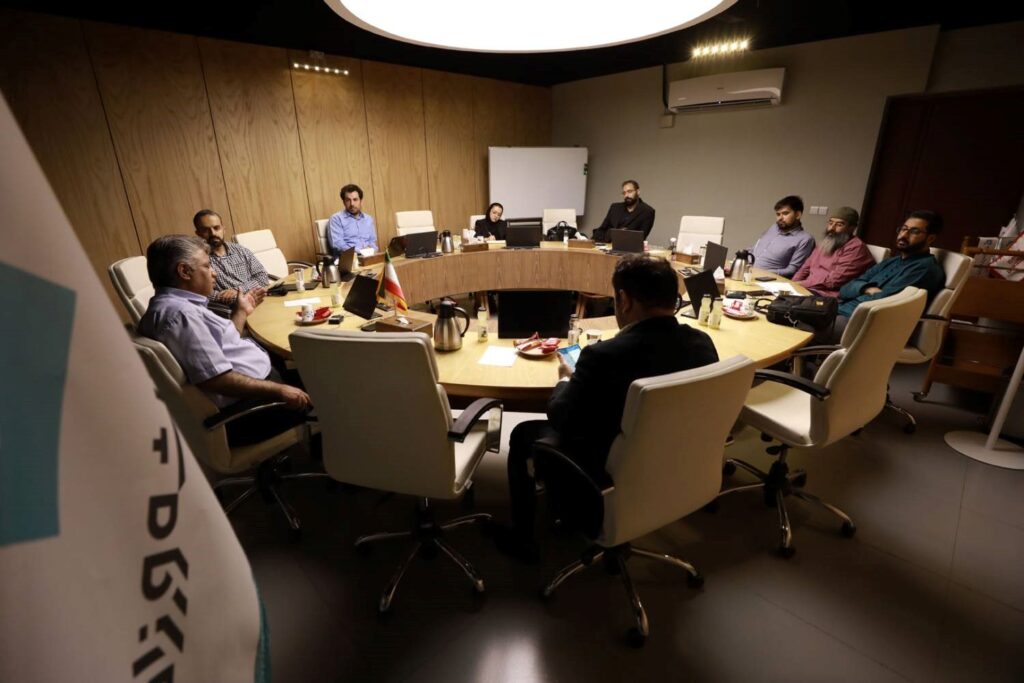
The specialized meeting “Passive Defense in the Health System” was held on Tuesday, July 27, 2025, chaired by the Health Core of the Growth Center at Imam Sadegh University (AS) and hosted by KHANA, with the participation of Dr. Kariminia, Head of the Passive Defense Headquarters in the Health Sector; Dr. Shirali, Head of the “Asas” Thinking Core; and Dr. Abbasi, Head of the Martyr Dr. Kazemi Ashtiani Research Center. The following is an analytical summary of the main points discussed, which can serve as an initial reference for drafting operational strategies in the field of health and passive defense.
New Challenges and Policy Requirements in Threat Management
The health system is exposed to evolving threats that simultaneously encompass cyber, cognitive, and supply chain dimensions.
Cyberattacks on medical systems and smart equipment, cognitive warfare targeting social capital and public trust, and chain crises in the supply of medicine and essential services are among the main manifestations of these threats.
Trends such as climate change, geopolitical shifts, mass migration, and vulnerabilities in information infrastructure are intensifying the scope and severity of these crises.
Managing this situation requires:
- Designing and deploying an early warning system.
- Continuous monitoring of both soft and hard threats.
- Applying interdisciplinary approaches to crisis analysis.
- Developing future-oriented scenario planning to simulate disruptions.
- Purposefully engaging knowledge-based institutions to formulate flexible, evidence-based policies.
Resilient Infrastructure and Community Empowerment
Enhancing the resilience of the health system demands smart and robust crisis management infrastructure. This includes:
- Developing integrated platforms for rapid coordination and decision-making.
- Converging health and defense data systems.
- Closing structural gaps between the treatment sector and passive defense structures.
Additionally, essential measures include:
- Increasing transparency in public information dissemination.
- Designing public education programs based on realistic scenarios.
- Producing accessible multimedia content for target groups to foster public participation and improve societal preparedness.


