Pakistan’s current behavior towards Persian Gulf Arab countries cannot be analyzed through a simple dependent-independent lens. Instead, Pakistan finds itself entangled in a “three-layered strategic dependency” puzzle:
- Financial Dependency due to chronic currency crises;
- Security-Military Dependency for military modernization against the threat from India and instability along its western borders;
- Geopolitical Dependency stemming from its encirclement by India, Afghanistan, and Iran.
These intertwined layers make the cost of severing ties with the financial-security network of Saudi Arabia significantly higher than the cost of maintaining conditional dependency.
The Buyback of Strategic Dependency
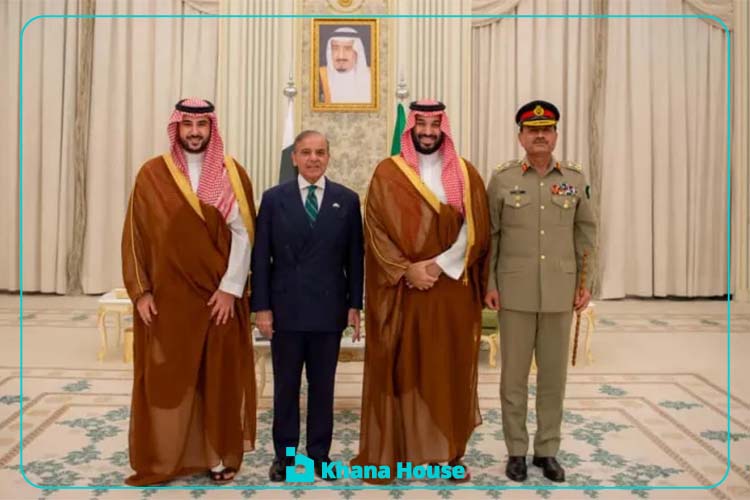
In April 2026, Saudi Arabia deposited 3 billion into Pakistan′s State Bank, while the UAE demanded immediate repayment of its 3 billion. This forced Pakistan to repay 2 billion and 450 million. It effectively increased Saudi influence and limited Pakistan’s autonomy in sensitive matters like arms contracts. A notable instance was Pakistan’s $1.5 billion deal with Somalia for JF-17 fighter jets, which Riyadh opposed, highlighting its leverage over Pakistan’s military decisions and obstructing its arms export ambitions.
Evolving Security Architecture in the Persian Gulf
The Persian Gulf security landscape is evolving, as Qatar’s strategic defense pact with Pakistan places it within a Saudi-led bloc. Pakistan, while currently dependent on Saudi support, leverages its nuclear capabilities and diplomatic ties with Iran, China, and Turkey to enhance its autonomy. The strategic outlook for Pakistan aims to transition from dependency on Saudi financial assistance to becoming essential for the stability of West Asia.
Overall, Islamabad’s strategy focuses on managing dependency and exploiting rivalries within the Persian Gulf to maximize its influence and autonomy in the region.
This study is conducted by Tehran International Studies & Research Institute in 2026.
To read more, download full paper