Iran seeks to reduce dependence on maritime routes by activating the Gwadar–Gabd corridor through Pakistan, expanding use of the China–Central Asia–Iran railway network, and accelerating completion of the Chabahar–Zahedan railway to secure the flow of essential goods.
Yuan Based Trade and Financing
The strategy emphasizes greater use of the Chinese yuan, expansion of oil-for-goods arrangements, targeted use of yuan reserves for critical imports, and issuance of yuan-denominated reconstruction bonds to finance recovery projects.
Essential Goods and Reconstruction
Priority is given to importing food, medicine, medical equipment, steel, and industrial raw materials. At the same time, Iran aims to attract Chinese investment for rebuilding railways, power plants, refineries, and industrial facilities damaged by war.
Strengthened Economic Diplomacy
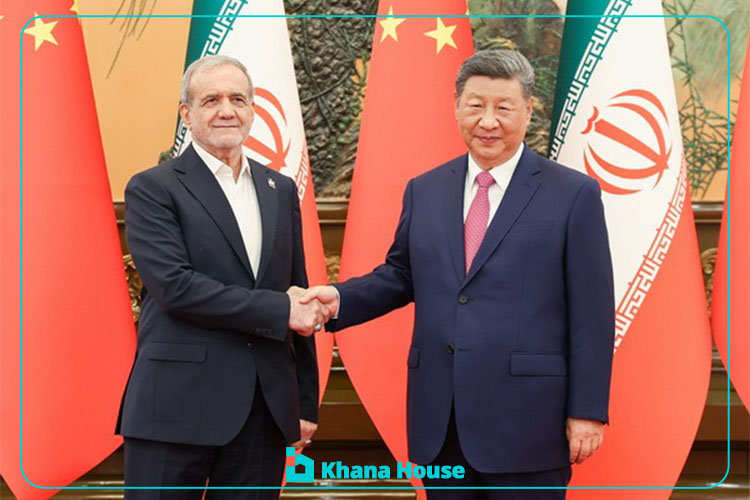
The framework calls for deeper engagement with Beijing through high-level negotiations, incentives for Chinese companies, and leveraging Iran’s strategic position in the Strait of Hormuz to secure economic cooperation and reconstruction support.
The proposal positions China as a critical partner in helping Iran maintain trade flows, secure essential imports, mitigate sanctions pressure, and accelerate post-war reconstruction through logistics, finance, and infrastructure cooperation.
This study is conducted by Tehran International Studies & Research Institute in 2026.