Co-determination is a model of corporate governance in which the workforce is recognized not merely as a production factor but as an active stakeholder in firm-level decision-making. This model represents a tangible manifestation of participatory governance at the enterprise level, emphasizing dialogue, transparency, and balanced power distribution between capital and labor. International experiences indicate that co-determination has been able to enhance the balance between economic efficiency and social justice. This structure contributes to improved mutual trust, increased job security, and greater enterprise resilience during economic crises, without causing declines in productivity or reductions in investment.
Explaining the Co-determination Structure in Germany
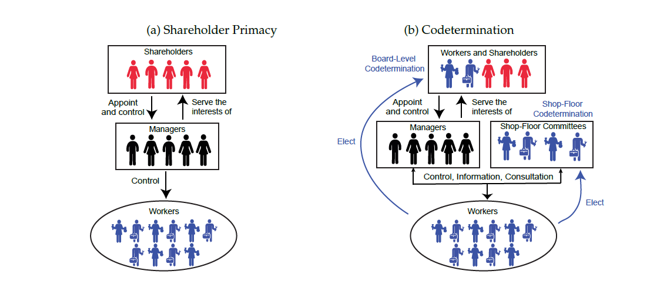
Germany’s co-determination system features a dual structure: The Supervisory Board for strategic decisions and the Works Council for workplace matters, ensuring employees influence both corporate governance and daily operations.
Critiques of the Co-determination Model
Critics argue that co-determination can reduce economic efficiency, discourage investment, and slow decision-making, potentially limiting innovation and flexibility in companies.
Evaluating the Impacts of Implementing the Co-determination Model
Co-determination in companies positively affects productivity, supports innovation, and increases employee job satisfaction, while enhancing the effectiveness of managerial tools.
Institutional Requirements for Implementing Co determination in Iran
Iran’s Commercial Code is shareholder-oriented and does not provide for employee participation, but higher-level policy documents—especially the 2019 National Decent Work Document—create openings for stakeholder involvement. Clause P-3 of this document recognizes the right to form independent associations and to take part in decisions affecting professional interests, offering a basis for participatory governance in firms.
Implementing co-determination in Iran requires major institutional and legal reforms, including:
- gradual amendments to the Commercial Code to allow effective employee representation on boards;
- pilot adoption of joint labor–capital governance models in selected companies to demonstrate benefits
- A shift toward a modified two-tier system to reduce power concentration and enable employee representation at the supervisory level.
This study was conducted at Iranian Collaborative Governance Think Tank in 2025.
To read the full version of this research paper, Download the full text