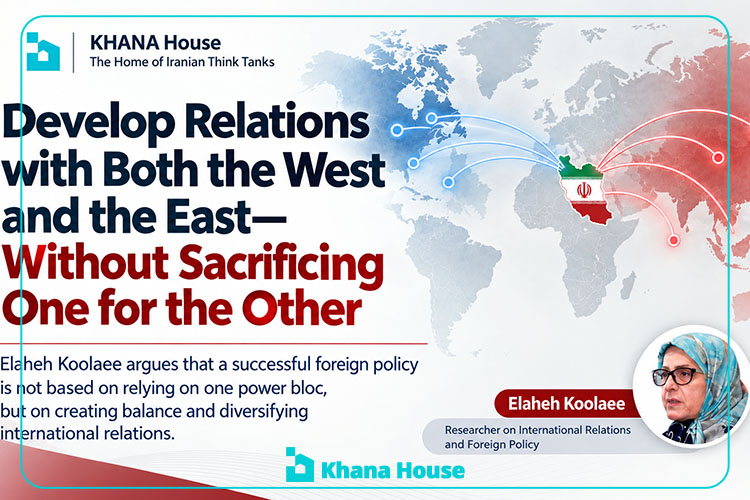
Elaheh Koulaei argues that successful foreign policy should be based on balancing relations and diversifying international partnerships rather than relying on a single power bloc. Drawing on Iran’s historical experience, she emphasizes that expanding ties with the East should not come at the expense of relations with the West.
The Origins of the “Look East” Policy in International Relations
The concept of “Look East” emerged during the Cold War, when countries often defined their foreign policies in relation to the United States or the Soviet Union. Its historical roots can be traced to West German Chancellor Willy Brandt’s policies in the late 1960s and early 1970s. Despite West Germany’s close ties with the United States, Brandt sought to improve relations with the Soviet Union, demonstrating that engagement with the opposing bloc could serve national interests without abandoning existing alliances.
Neoclassical Realism and the Drivers of Iran’s Look East Policy
Iran’s Look East policy can be examined through the lens of realism, particularly neoclassical realism, which highlights both international insecurity and domestic political factors. U.S. pressure on Iran, anti-American sentiment within parts of the political establishment, and regional security concerns have all contributed to this orientation. Cooperation with Eastern powers is therefore viewed as a means of strengthening Iran’s security and strategic position.
Is Iran’s Look East Policy Strategic Balancing or a Choice of Necessity?
Koulaei questions whether Iran’s Look East policy can genuinely be considered strategic balancing or long-term diversification. In her view, it is better understood as a choice driven by necessity rather than a deliberate tactical strategy. Genuine balancing requires maintaining relations with Western countries while simultaneously expanding ties with Eastern powers. Since Iran has not achieved this balance, its current approach falls short of a comprehensive foreign policy strategy.
The Role of Ideology in Iran’s Relations with Russia
Ideology has played a significant role in shaping Iran’s relations with Russia. Following the Soviet Union’s collapse, Russia’s pro-Western political currents showed limited interest in expanding ties with Iran, with some political elites viewing the Islamic Republic as a source of Islamist influence. This situation gradually changed as Russian foreign policy evolved during the 1990s and particularly under Vladimir Putin, when confrontation with the West became more pronounced.
Upcoming Feature: Iran’s Look East Policy
The upcoming “Look East” series will explore the historical foundations, strategic drivers, and geopolitical implications of Iran’s relations with Eastern powers, examining the challenges of balancing international partnerships while protecting national interests.