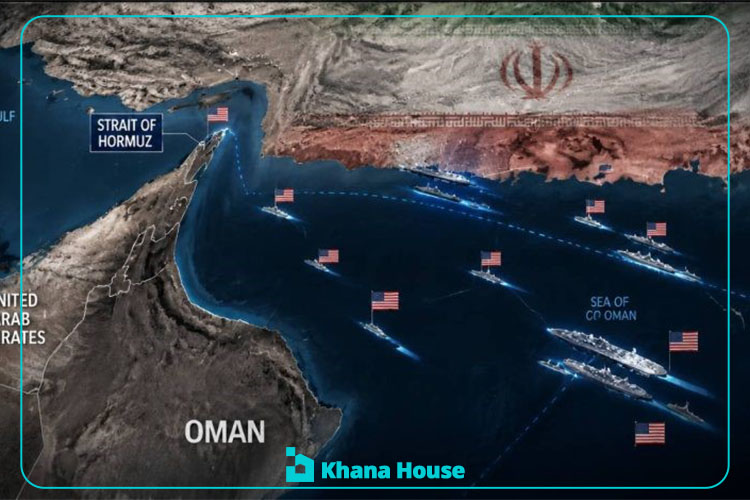
Following a temporary ceasefire after the Third Iran War, the United States reportedly initiated a maritime blockade in the Oman Sea on April 13, 2026, aiming to increase economic and military pressure on Iran. The blockade focuses on inspecting commercial and oil shipments between the Strait of Hormuz and the Arabian Sea, while raising significant legal and geopolitical concerns.
From Iran’s perspective, the blockade lacks legitimacy under international maritime law and threatens a trade corridor that handles the vast majority of the country’s imports and exports. The measure is viewed as part of a broader U.S. strategy to intensify sanctions enforcement while avoiding the costs of direct military confrontation.
Iran’s Strategic Response Options to a U.S. Maritime Blockade
Three main scenarios are available to Tehran:
1.Hard Military Response
Rapid efforts to break the blockade through military deterrence and reciprocal actions, offering immediate impact but carrying a high risk of escalation.
2. Controlled Tension and Attrition
A calibrated strategy designed to gradually increase costs for the United States while avoiding a full-scale conflict.
3. Conditional Diplomacy and Crisis Management
Combining legal action, international diplomacy, and strategic patience to reduce escalation risks and challenge the blockade’s legitimacy.
Strategic Assessment
A balanced approach that combines military preparedness, Hormuz diplomacy, international legal initiatives, stronger cooperation with BRICS and regional partners, and enhanced economic resilience may provide Iran with the most sustainable path forward.
This study is conducted at Forsat Center in 2026.
To read more, download full paper