A Strategic and International Analysis Center Note on Trump’s Psychological Operations in Saudi Arabia and Decoding the U.S. Social Pressure Strategy Against Iran
Abstract
In the competition among international actors, social, media, and psychological domains are part of the main arenas of confrontation. Therefore, influencing the minds and emotions of target societies has become a key tool for changing the behavior of governments. Trump’s remarks in Saudi Arabia comparing the situations of Iran and Saudi Arabia are an example of such actions, and a precise understanding of them is considered essential for analyzing upcoming political and security trends.
Trump’s Efforts to Use Social Pressure as a Negotiation Strategy
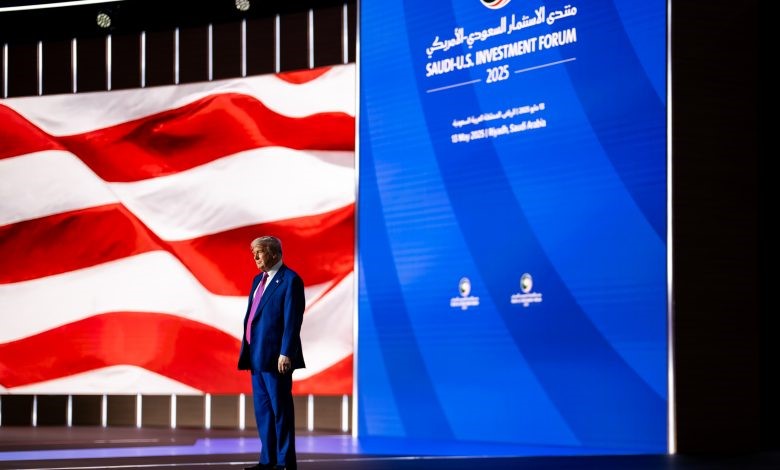
During Trump’s presidency, the U.S. employed a strategy called “socializing negotiations,” aiming to influence Iranian public opinion to pressure the government into softening its stance. Trump’s speech in Saudi Arabia contrasted Iran’s struggles with the progress of Gulf countries, suggesting that Iran’s revolutionary policies caused its underdevelopment. This psychological operation sought to create dissatisfaction and encourage Iranians to favor engagement over resistance, thus facilitating concessions in negotiations.
Statements Aligned with the Maximum Support Policy
Trump’s speech in Saudi Arabia was part of the U.S. “maximum support” strategy aimed at applying multi-layered pressure on the Islamic Republic of Iran—not just externally, but also internally through Iranian public opinion. By presenting an idealized image of regional countries like Saudi Arabia, Trump sought to shift the Iranian public toward a narrative of reconciliation with the West. This psychological operation was designed under the framework of “socializing negotiations,” aiming to stimulate a sense of relative deprivation and public dissatisfaction, thereby pressuring Iran’s leadership to retreat from its revolutionary principles and resistance policies.
Conclusion
The U.S., through the strategic project of “socializing negotiations,” aims not only to apply external pressure on Iran but also to generate internal social pressure by shaping public opinion to demand concessions and a retreat from the discourse of resistance. This is pursued through comparative messaging, suggestions of relative deprivation, and highlighting developmental successes of neighboring countries like Saudi Arabia and the UAE, to influence Iran’s strategic decisions psychologically and socially—rather than through traditional diplomatic confrontation.
Recommendations:
- Iranian negotiators must remain vigilant of this shift in the battlefield—from political to social—and base any concessions strictly on national security and vital interests, not media or fabricated public demands.
- Domestic media and cultural elites should actively counter this psychological operation by promoting successful narratives of resistance and self-sufficiency, to prevent the emergence of a national sense of inferiority.
- While diplomacy and global engagement are essential, such interactions must be based on dignity, wisdom, and genuine national interest—not on psychological coercion from below.
This study was conducted by Mohammadmehdi Emadi, Researcher of International and Strategic Analysis (ISA) Center.
To read more, click here