Introducing agrivoltaics as a novel strategy for generating solar energy alongside agricultural production
Abstract
One of the most important challenges facing the country today is energy imbalance. Alongside this issue, air pollution caused by fossil fuels and fuel sector imbalance has further highlighted the importance of producing clean energy. Additionally, Iran faces a water resource crisis due to its dry and semi-dry climate and improper aquifer management. This issue, combined with the geological conditions of some areas, urban development, and the loss of agricultural land, has resulted in limited arable land in the country. Therefore, finding a solution that can address all these challenges simultaneously would be highly beneficial.
Introduction to Agrivoltaics
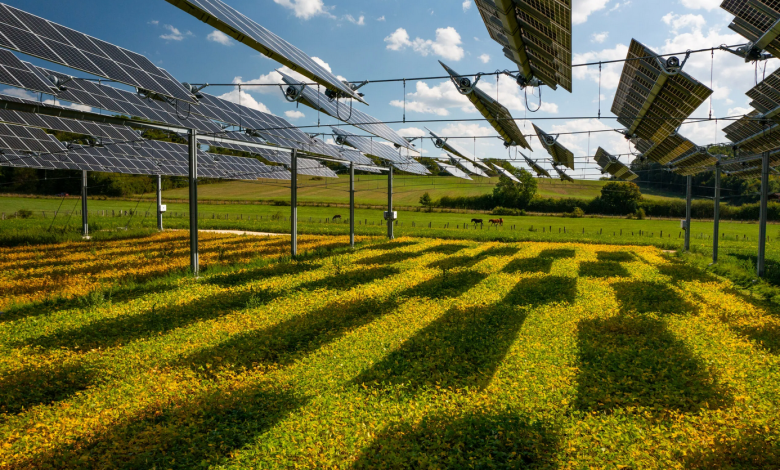
Agrivoltaics combines agriculture and solar power by using the same land for both crop production and energy generation. First introduced in 1981 in West Germany, it gained renewed research interest from 2013, with Japan, France, and Germany leading and other countries developing related infrastructure.
Mutual Effects of Solar Panels and Agriculture in the Agrivoltaics Method
Agrivoltaics means using the same land for both farming and solar power generation. Solar panels reduce sunlight but help lower water consumption and protect crops. Plants cool the panel environment and reduce dust, which improves panel performance.
Does agrivoltaic technology have applications in Iran?
Agrivoltaic technology can benefit Iran by addressing challenges in agriculture and energy. It helps reduce agricultural land loss, increases crop value on solar farms, lowers water use, and is especially useful in areas with limited farmland like central deserts.
Legal Capacities of Agrivoltaic Technology in Iran
Iranian laws support agrivoltaic technology, allowing farmers to simultaneously produce clean electricity and agricultural products, optimize energy consumption, avoid agricultural power restrictions, and increase their income. Some related regulations have yet to be fully implemented.
This study was conducted atWater and Energy Synergy Home in collaboration with Amin Vatan Pour and Mehrdad Poursadegh in 2025.
To read more, click here