An analytical note by the International Relations Think Tank on the Zangazur Corridor, examining Israel’s role in this context and the existing threats to Iran
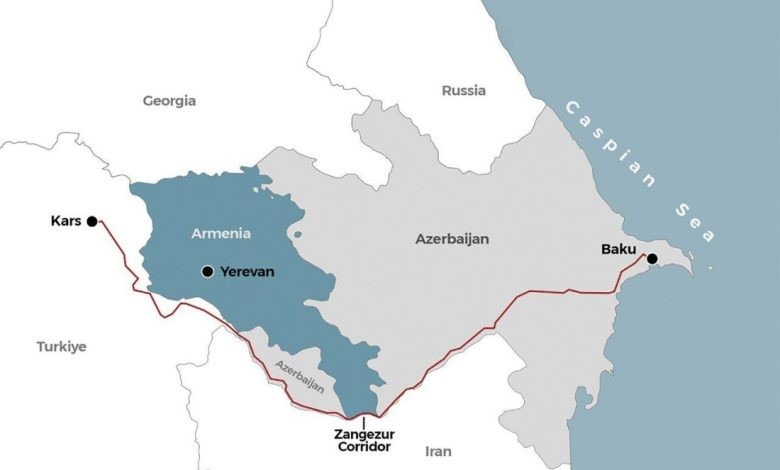
In the summer of 2025, Azerbaijan announced that the Zangazur Corridor would be fully operational by spring 2026. The corridor, backed by Israel—which has supplied over 69% of Azerbaijan’s military needs in recent years—aims to turn Azerbaijan into a direct bridge to Iran’s northern borders. If completed, the 32-kilometer project could sever Iran’s border with Armenia and provide potential access to Iran’s borders from three directions, marking a significant security challenge for Tehran.
Phase One: From Military Cooperation to Strategic Alliance
Baku-Tel Aviv relations have evolved from simple arms trade to a strategic alliance against Iran. Azerbaijani airbases, including Sitalchay and Nakhchivan facilities, provide forward support for Israeli drones and fighter jets, reducing operational distance to Iranian targets from 1,200 km to under 500 km. Beyond military ties, Azerbaijan also serves as a bridge for Israel to Central Asia and China, strengthening the strategic partnership and limiting diplomatic pressure.
Phase Two: A New Threat Geometry; The Encirclement Triangle
The Zangazur Corridor, passing through Armenia’s Syunik province, completes a Turkey-Azerbaijan-Nakhchivan strategic triangle, creating a direct threat corridor to Iran from the north and northwest. Israeli military bases in Nakhchivan, just 45 km from Iran’s border, could access personnel and equipment from Azerbaijan and Israel, enabling multi-front operations and posing the first real multi-front war threat to Iran since the Iran-Iraq War.
Phase Three: Russia in a Strategic Dilemma
Russia faces a strategic dilemma regarding the Zangazur Corridor. While concerned about NATO influence in the South Caucasus, Moscow cannot jeopardize ties with Baku and has reduced its military presence in the region to just 15% due to the Ukraine war. Recent Russian statements supporting Azerbaijan’s access to Nakhchivan indicate a shift in the regional balance of power, leaving Iran without its main strategic ally and forcing Tehran to develop an independent response.
Phase Four: Armenia; The Last Line of Defense Against the Storm
Armenia remains the last significant obstacle to the full realization of the Zangazur Corridor. Prime Minister Nikol Pashinyan faces pressure from Baku and internal nationalist groups, while U.S. proposals to lease the corridor aim to legitimize the project internationally. For Iran, keeping Pashinyan in power has become a national security priority, as his fall could remove the final barrier to the corridor’s completion.
Phase Five: Information Warfare and the Threat of Influence Networks
The Zangazur Corridor is at the center of an information war and covert operations, with disinformation campaigns and Israeli-linked networks posing threats to Iran’s northern borders.
Phase Six: Losing Transit Leverage and the Need for Adaptation
The Zangazur Corridor threatens Iran’s transit leverage by offering a faster, sanction-free route from Asia to Europe, potentially bypassing Iran entirely. Strategic adaptation, including strengthening alternative corridors and delaying Zangazur, is essential to mitigate its economic impact.
This study was conducted at International Relations Think Tank analysis network By Amirhossein Ebrahimi in 2025.
To read more, click here