Prof. Dr. Hei Sing Tso
President, Guiguzi Stratagem Learning, Hong Kong
I Ching and Economic Reform in China: Ancient Wisdom Behind Modern Change
I Ching and Economic Reform in China offers a unique perspective on how ancient Chinese philosophy influenced modern political and economic transformation. In traditional China, alongside Confucianism and Taoism, Legalism emerged as a school of thought advocating political and economic reforms to strengthen national power. Throughout history, several statesmen attempted Legalist reforms, yet many ultimately failed.
The I Ching (Book of Changes), one of the most important Chinese classics, consists of 64 hexagrams. Among them, two hexagrams are particularly relevant to political and economic reform: Hexagram 49 Ko (Revolution) and Hexagram 50 Ting (The Caldron). Together, they provide a complete philosophical framework for successful reform.
Legalism, Reform, and the Limits of Revolution (Hexagram 49 Ko)
Hexagram 49, Ko (Revolution), represents abolition and radical change. It emphasizes breaking down outdated institutions and systems. However, reform cannot rely solely on destruction. History shows that reforms focused only on abolition often lead to instability and failure.
For reform to be sustainable, abolition must be followed by construction. This is why Ko is naturally followed by Hexagram 50, Ting.
Hexagram 50 Ting: The Foundation of Sustainable Reform
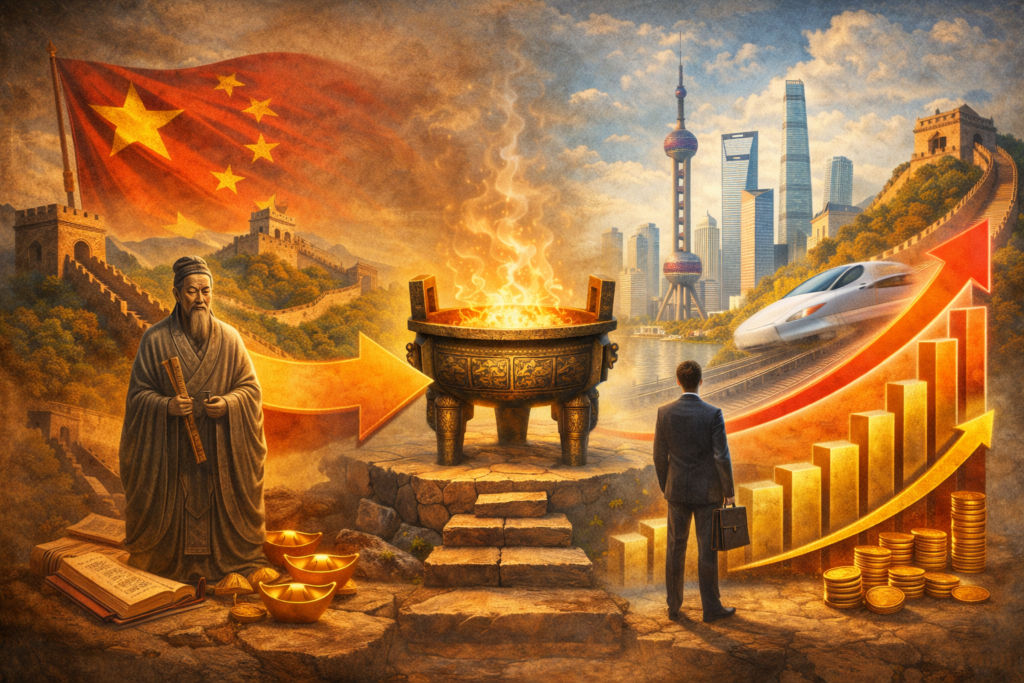
Hexagram 50, Ting (The Caldron), symbolizes nourishment and renewal. The caldron is a vessel used to cook food, representing the creation of systems that sustain society after old structures have been dismantled.
According to the I Ching:
“The holy man cooks in order to sacrifice to God and the Lord, and he cooks feasts in order to nourish the holy and the worthy.”
The essence of Ting is building new institutions capable of nourishing society politically, economically, and morally.
Ideology, Elites, and Reform Legitimacy
- God, the Holy, and the Worthy
Successful reform must be integrated into an official ideology or theology. Before initiating economic reform, Deng Xiaoping articulated the theory that China was still in the preliminary stage of socialism. This preserved ideological continuity while allowing reform.
Equally important is the support of “the holy and the worthy,” meaning elites across society. Reform policies must motivate elite support through ideology, material incentives, lobbying, and negotiation. Many historical reforms failed due to insufficient elite backing.
Gentle Governance: Observation, Feedback, and Adjustment
- Gentleness with Sharp Eyes and Ears
“Eyes and ears” symbolize observation, research, and public opinion assessment. Reform should be implemented gently, with continuous monitoring and room for adjustment.
China’s establishment of Special Economic Zones is a clear example. These zones served as experimental spaces where policies could be tested on a small scale. Temporary laws and regulations were regularly reviewed, allowing gradual improvement and minimizing risk.
Gradual Progress Over Shock Therapy
- Yielding Advances and Moves Upward
Reform should be progressive and patient. Shock therapy, although favored by some liberal economists, contradicts the wisdom of Hexagram Ting. Reform involves two stages:
- Abolition (Ko)
- Construction (Ting)
Both stages should not be rushed. After the disruptive abolition of old systems, society needs time to recover before new institutions are firmly established.
Balance, Competence, and Integrity in Reform Teams
- Attaining the Middle and Finding Correspondence
Although rooted in complex I Ching theory, this concept emphasizes balance and capable leadership. Reform requires a team of professionals with integrity, resilience, and diverse perspectives.
Deng Xiaoping’s reform team included both conservative and liberal thinkers, allowing constructive debate and smoother institutional transition.
Ancient Wisdom as a Strategic Guide for Modern Reform
Reform can occur at multiple levels, from specific policies to fundamental institutions. The wisdom of the I Ching, combined with China’s real-world experience, demonstrates that sustainable reform depends on ideology, elite support, gradual implementation, and institutional nourishment.
This ancient philosophical framework remains a valuable strategic reference for policymakers across different nations seeking long-term reform success.