TABA Innovation Center
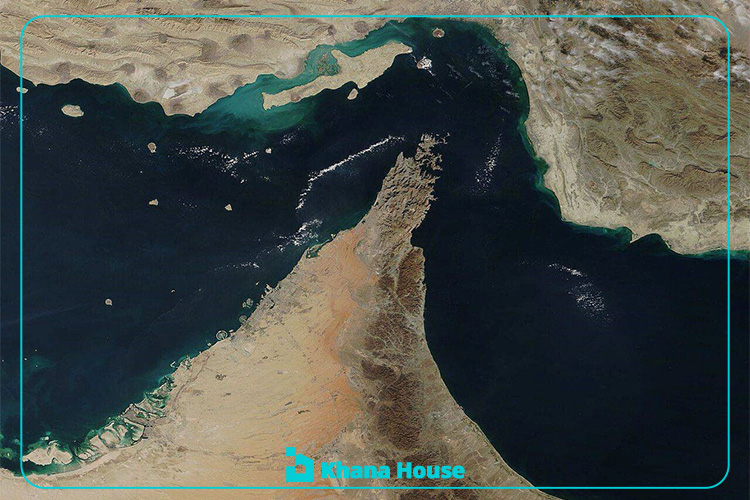
The February 28, 2026 war transformed the Strait of Hormuz into the focal point of a full-scale legal and economic crisis. With the war now over, a key question arises: How should Iran manage this vital waterway to both recover from the war’s substantial losses and establish a stable and deterrent regional order?
Two main models can be compared:
“Service Fee” Model (based on Article 26 of the 1982 Convention)
- Charging fees for services such as navigation, bunkering, and information exchange;
- Essentially voluntary and dependent on competitive infrastructure;
- Limited and unreliable revenues, estimated at only tens of millions of dollars;
- Positioning Iran primarily as a weak service provider.
“Compensatory Levy” Model (based on countermeasures and fundamental change of circumstances)
- Supported by legal doctrines including countermeasures, the right of self-defense, and fundamental change of circumstances;
- Potential for substantial and sustained revenue—for example, under a 10-year scenario, a rate of $2.54 per barrel could generate approximately $17 billion annually;
- Creating lasting deterrence and a bargaining lever for sanctions relief;
- Drawing on historical precedents such as the four-century-old Sound Dues and the UN compensation mechanism established after the Iraq-Kuwait conflict.
Key conclusion
Despite the seemingly attractive nature of the service-fee model, the compensatory levy model is presented as the only approach capable of simultaneously generating resources for reconstruction and elevating Iran from a “weak” position to that of a “rule-making power.”
The full policy note is available in the attached file: