Amirkabir National Policy Think Tank
Physical Oil Market Signals
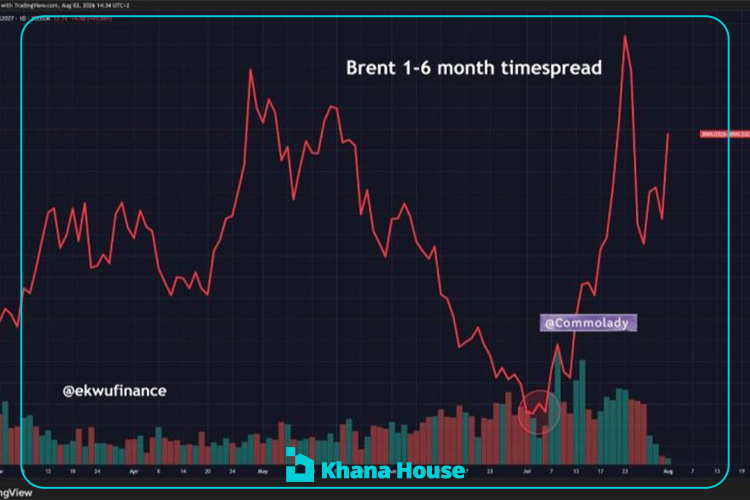
Although spot oil prices have fallen by around 9% in recent weeks, the premium for prompt Brent has risen by nearly 20%, indicating that immediate access to physical crude has become significantly more valuable. The spread between prompt delivery and six-month contracts has also widened to around $13 per barrel, reflecting deep backwardation and suggesting that selling pressure is concentrated in derivatives markets, while the physical market remains constrained by tight supply and depleted inventories.
Recent disruptions linked to the war, including the temporary closure of the Strait of Hormuz and increased withdrawals from strategic petroleum reserves (SPR), have reduced the global supply buffer and heightened sensitivity to further disruptions.
Energy, the Yen and U.S. Financial Stability
The depletion of Japan’s oil inventories has increased its vulnerability to supply disruptions, making tanker flows to Japan relevant not only to energy security but also to U.S. financial markets. Washington’s recent intervention to support the yen—selling euros rather than dollars—also suggests an effort to avoid additional pressure on the dollar and Treasury markets. JPMorgan has warned that coordinated intervention has limited effectiveness without addressing Japan’s underlying economic weaknesses.
Overall, developments in oil and currency markets point to a broader vulnerability: maintaining stable energy flows to East Asia is increasingly connected to U.S. financial stability. A renewed disruption in oil supplies could therefore raise the costs of managing energy, currency and debt-market pressures simultaneously.
To read more, download full paper