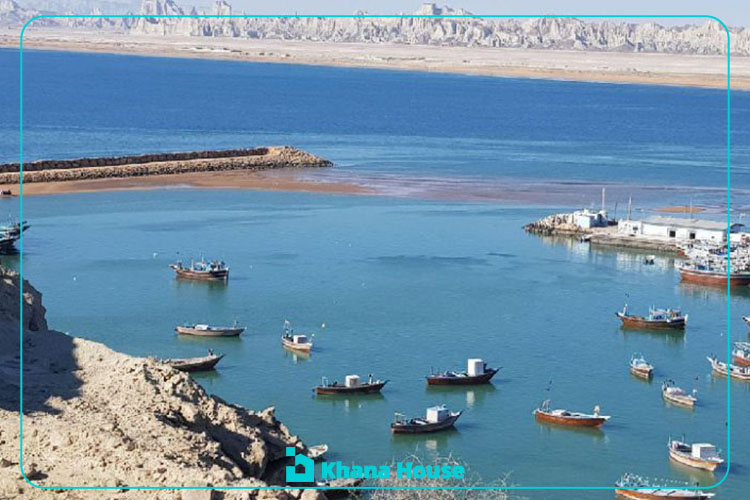
Iran’s access to maritime routes became a critical economic and security concern during the Iran–Iraq War as Iraq targeted ports and shipping lanes.
Iran responded with integrated naval escorts, traffic control, surveillance, and local maritime expertise to keep essential supply flows moving.
Part I: Insecurity and Necessity — The Crisis in Southern Corridors
Iraq targeted Iran’s southern ports and maritime routes with missiles and repeated airstrikes, severely threatening the movement of commercial and strategic cargo.
In response, Iranian port authorities and naval forces developed coordinated security and escort mechanisms to keep maritime supply routes operational.
Part II: The “Convoy System” — From Anchorage to Safe Berthing
Iran established a convoy escort system involving the Navy, IRGC, and Ports and Maritime Organization to protect commercial vessels from multidimensional threats.
Vessels assembled at Bushehr, moved in organized convoys under naval and air protection, and followed monitored routes through high-risk waters to Bandar Imam Khomeini.
Part III: Guidance Posts and the Intelligence Network
Guidance posts constituted a critical surveillance and communications network along the convoy routes. They monitored weather conditions, reported the convoy’s position, and warned escort units and commercial vessels of potential missile or air attacks.
Their role complemented the physical protection provided by warships, creating an additional layer of intelligence-based security that enabled convoys to alter their routes or employ evasive measures when necessary.
Part IV: Human Shields at Sea — Naval Commandos on Commercial Vessels
Naval commandos and IRGC personnel were deployed aboard commercial vessels to counter sabotage, boarding attempts, and direct attacks. They provided onboard protection, operated air-defense equipment installed at Bushehr, and safeguarded sensitive cargo.
They also acted as rapid-response teams during fires or missile strikes, helping transform vulnerable commercial ships into better-protected floating platforms.
Part V: Tactical Night Navigation and Local Maritime Guides
Because Iraqi forces maintained strong surveillance and firepower along the main routes, convoys frequently traveled at night under strict blackout procedures. This reduced their exposure to visual and radar detection.
Local maritime guides played a crucial role by using their knowledge of coastal features, islands, currents, secondary channels, and blind spots to navigate convoys through safer routes and avoid known missile engagement zones.
Part VI: Emergency Shipping Traffic Control Plan
The plan established centralized coordination to protect commercial and tanker traffic and prevent attacks, sabotage, or vessel seizure.
It focused on route control, cargo prioritization, naval escorts, intelligence coordination, and emergency measures across key southern ports.
Part VII: National Cooperation — Ports and the Navy on a Unified Front
The success of the escort system depended heavily on cooperation between the Ports and Maritime Organization and the Islamic Republic of Iran Navy. The Ports and Maritime Organization provided equipment, skilled and local personnel, and support mechanisms for affected employees, while the Navy secured areas outside the ports and protected maritime routes.
According to the document, this integrated network successfully escorted and controlled more than 1,000 commercial and tanker vessels carrying approximately 300 million tons of cargo into Iranian ports.
Part VIII: Escorting Special and Sensitive Cargo
Escort operations extended beyond ordinary commercial shipments to highly sensitive cargo, including advanced defense equipment, strategic industrial materials, and spare parts. Because these shipments were considered high-value targets, they received additional layers of protection.
Naval commandos were deployed extensively aboard vessels, while air-support units remained on high alert, making these missions effectively frontline operations.
Part IX: Strategic Assessment — From Tactical Success to Structural Vulnerability
The war exposed Iran’s overdependence on Bandar Imam Khomeini, which suffered repeated attacks and major infrastructure damage despite effective maritime escorts.
The convoy system maintained supplies temporarily, but port concentration remained a strategic vulnerability, eventually shifting more functions toward Shahid Rajaee Port.
Key Lesson for Contemporary Iran
Iran’s key lesson is to diversify ports, maritime routes, and road/rail connections so that the loss of one gateway cannot disrupt the entire supply chain.
The wartime convoy experience also showed that naval protection, intelligence, local knowledge, and onboard security are most effective when combined with resilient, distributed infrastructure.
This study is conducted by Saman Fereidoni at Economic Diplomacy Studies thinktank, Imam Sadiq University in 2026.
To read more, download full paper