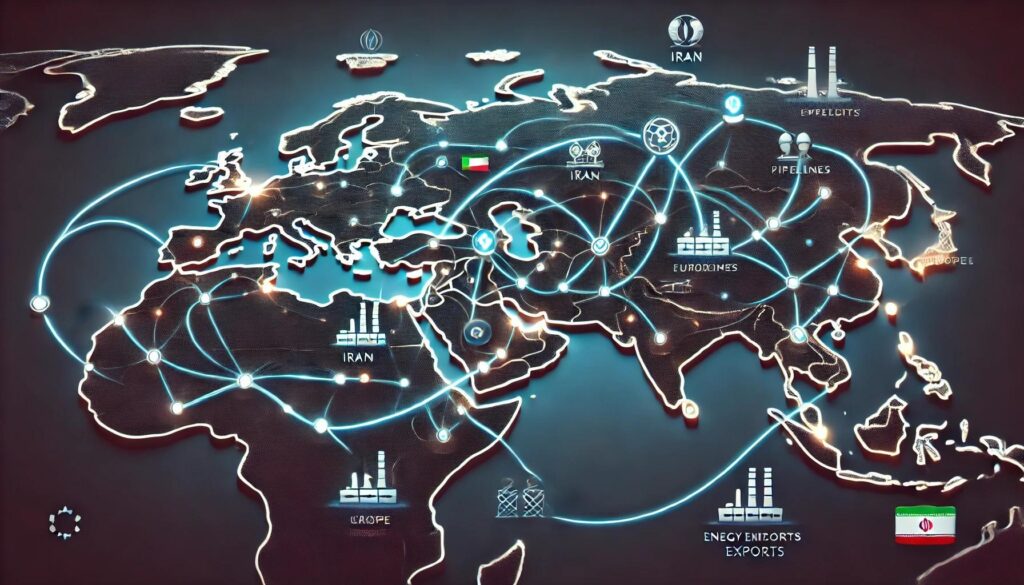
The theories of geopolitical thinkers Halford J. Mackinder and Nicholas Spykman highlight Iran’s unique position. Mackinder warned that domination of the “Heartland” (Eurasia) would lead to supremacy over maritime powers, while Spykman argued that control of the “Rimland” is crucial for preventing Heartland powers from extending their influence to the seas. This dual significance means Iran’s northern half is part of the Heartland, while the southern half lies in the Rimland.
Historical Resistance to Iran’s Independent Deterrence and Its Strategic Importance in U.S. Policy
Historically, global powers have resisted Iran’s emergence as an independent deterrent. The occupations during World Wars I and II and Cold War dynamics exemplified this. Today, the U.S. perceives controlling Iran as vital for its strategy against China, as highlighted by former National Security Advisor Michael Flynn.
Subduing Iran offers the U.S. significant benefits: it helps solidify Israeli dominance in West Asia and leverages Iran’s geography to counter China’s influence. Control over Iran’s territory can provide access to Central Asia and the Persian Gulf, critical for global oil supplies.
Iran’s Nuclear Deterrence: A Challenge to the U.S. Led Unipolar Order
By completing its nuclear deterrence, Iran challenges the U.S.-led unipolar order. Such capabilities could deter military action against it and enable Iran to assert its interests in a multipolar world through fair negotiations, potentially paving the way for its development and regional influence.
This policy note is written by Meysam Baharlou in 2026.
To read more, download full paper