Options available to Iran for closing the Strait of Hormuz, the effects of such closure on global energy markets, and alternative routes for oil transportation to bypass the Strait of Hormuz
Abstract
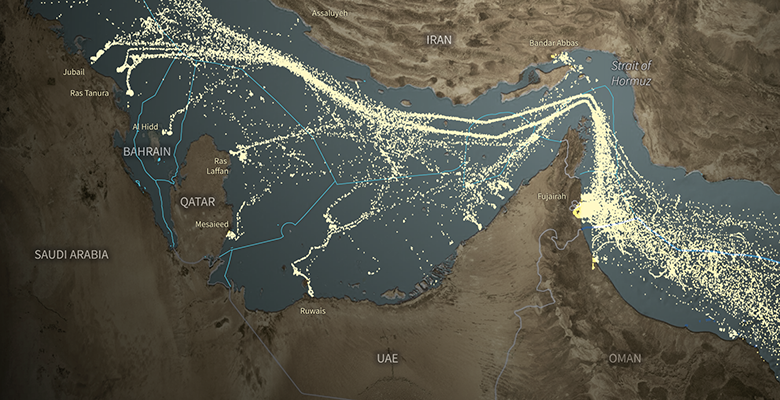
About 30% of the world’s daily oil and petroleum products, as well as 1.5 billion cubic meters of LNG exports, pass through the Strait of Hormuz, making it the most important energy passageway in the world. This strait, connecting the Gulf of Oman and the Persian Gulf, is 34 kilometers wide and includes two shipping lanes for vessels and oil tankers. These two lanes, each about three kilometers wide, accommodate the daily passage of more than 33 ships and tankers. Iran, by utilizing its southern coast, is able to monitor traffic within the Persian Gulf. This is especially significant because the Hormuz waterway falls under Iranian control. With control over the Strait of Hormuz, Iran has the ability to disrupt the global energy market. This report examines Iran’s capability to close the Strait of Hormuz and the potential to interfere with the global energy market.
Options Available to Iran about strait of Hormuz
- Complete closure:
Iran can fully block all ships and tankers passing through the Strait using comprehensive military action. This would cause a global energy crisis and a sharp rise in oil prices but would carry heavy military and political consequences. - Disrupting passage:
By limited actions such as laying mines or attacking certain tankers, Iran can reduce the flow of oil without a total shutdown. This approach has fewer international repercussions, allows targeting specific countries or regions, and can be carried out by allied groups. - Threatening closure:
Iran can leverage its strategic control of the Strait by threatening to close it, without direct military action, to achieve political or economic goals.
During the 1973 oil crisis, Arab oil-exporting countries decided to halt crude oil exports in response to the United States’ support for Israel. As a result, oil prices surged from $2.9 to $11.65 per barrel within a few months. This price jump had significant effects on the economy, technology, and even the lifestyle of people in the West. Considering this experience and the approximately 22 million barrels of crude oil and petroleum products that pass daily through the Strait of Hormuz, closing the strait gives Iran the capability, if it chooses, to challenge the global economy and development trends. However, it should be noted that today, consuming countries have taken measures such as using pipelines to bypass the Strait of Hormuz, maintaining strategic and commercial reserves, and implementing consumption reduction plans to mitigate the effects of oil dependency.
A complete closure of the Strait of Hormuz and the cessation of crude oil and product exports from this strait will not have a significant immediate impact on the oil market in the first month; it will mainly cause an increase in oil prices. Therefore, any decision to close the Strait of Hormuz must be a long-term one because only after at least two months of closure can it deeply affect the oil market and challenge the economies of Western countries. Alternatively, disruption of tanker traffic through methods such as mine-laying or using allied groups can create interference in the strait. This disruption would increase oil prices and raise the costs for the U.S. to enforce sanctions on Iran. Such increased costs could lead to a reduction or halt in the escalation of U.S. sanctions pressure on Iran.
This study was conducted at The Research Institute for Science, Technology and Industry Policy by Seyed Hamed Tavangar in 2019.
To read more, click here