Memo from the Center for Political and International Studies on the Review and Analysis of U.S. Tariffs on Various Countries and the Strategic Formation of Trump’s Trade War
Abstract
Tariffs are the most important tool for altering U.S. economic and foreign policy based on the “America First” principle. Although the ultimate authority to impose tariffs lies with the United States Congress, the fact that Republicans hold the majority in both the House of Representatives and the Senate has meant that none have opposed the White House’s actions regarding tariffs thus far. In reality, Trump uses tariffs for two main purposes: to confront the trade deficit, and to negotiate on non-economic issues.
These tariffs are applied to all countries—whether allies and friends or adversaries and rivals. In any case, tariffs have become the president’s new arsenal and a roadmap to achieving his goals.
The tariffs Trump has implemented against various countries can be categorized into four groups:
Negotiation or foreign policy tariffs
Protectionist tariffs
Retaliatory tariffs
Trade Deficit Tariffs
Trade deficit-related tariffs: Negotiating tariffs are primarily used for foreign policy rather than economic goals. They are employed as a negotiation tool to exert pressure or as a threat. For example, Trump warned Colombia with tariffs if they did not agree to return illegal immigrants detained in the U.S. using military planes. Colombia quickly agreed to avoid economic damage.
In 2025, Trump threatened to impose additional tariffs on imports from China, Canada, and Mexico unless they took action on immigration and fentanyl. Mexico responded by deploying military forces at the border, delaying the tariffs temporarily. However, tariffs on Chinese goods remained, and China retaliated by imposing its own tariffs on U.S. products.
Protectionist tariffs: These tariffs aim to protect strategic industries from foreign competition, with a notable example being the 25% import tariffs on steel and aluminum. Fewer exemptions may be granted to allies compared to 2018. While a final list of critical industries hasn’t been released, Trump has suggested tariffs on semiconductors, pharmaceuticals, and oil and gas. The focus is on increasing domestic production in sectors like automobile manufacturing, battery production, and critical minerals.
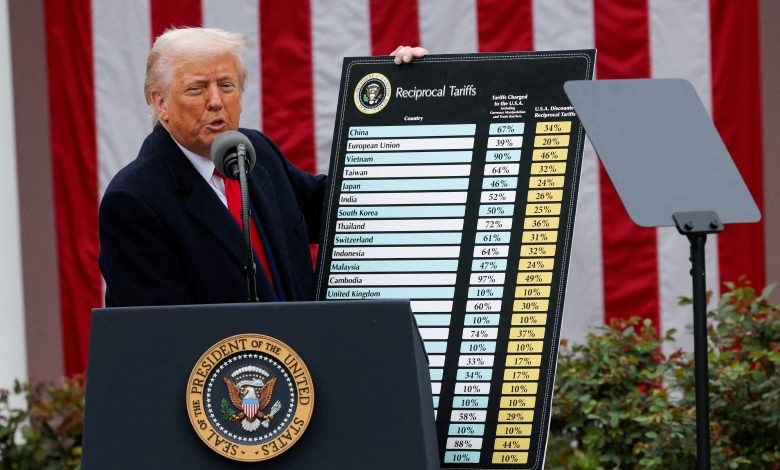
Reciprocal tariffs: The Trump administration plans to review tariffs of each country. If a country imposes higher tariffs on U.S. imports than the U.S. does on theirs, the U.S. will apply the same tariff in return. This approach is complex and requires detailed analysis of each country’s trade system. Congress must approve these measures, and non-tariff barriers, like value-added tax or specific import regulations, might be used instead, but they add complexity to the process.
Trade Deficit Tariffs: Trump’s “America First” trade policy focuses on addressing the U.S. trade deficit. The Secretary of Commerce, in consultation with other officials, will review the trade deficit, identify its causes, and recommend policies, including tariffs, to reduce it. The level of tariffs will depend on whether the goal is to eliminate or just reduce the deficit. Countries with a trade surplus with the U.S., like the UK and Australia, will be exempt from these tariffs but may face other types of tariffs. In 2024, the U.S. trade deficit with 20 countries was $1.42 trillion, with the majority of the deficit coming from China, Canada, Mexico, and other countries. Imposing new tariffs could violate existing trade agreements.
Upcoming Scenarios
In the next four years, tariffs will remain a key tool in Trump’s foreign policy and may be used as leverage in any political dispute.
- High-Probability Scenario: More tariffs are expected on Chinese imports, as well as on countries like Mexico and Vietnam that both depend on Chinese goods and have large trade deficits with the U.S. The goal is to reduce U.S. reliance on China.
- Medium-Probability Scenario: In response to U.S. protectionism, other countries may impose 10–20% tariffs on American goods. For example, in March 2025, Canada announced a 25% tariff on $20 billion worth of U.S. imports, causing significant economic damage to the U.S.
This study was conducted at Institute for Political and International Studies (IPIS) by Alireza Ghezili in 2025.
To read more, click here