Ata Bahrami
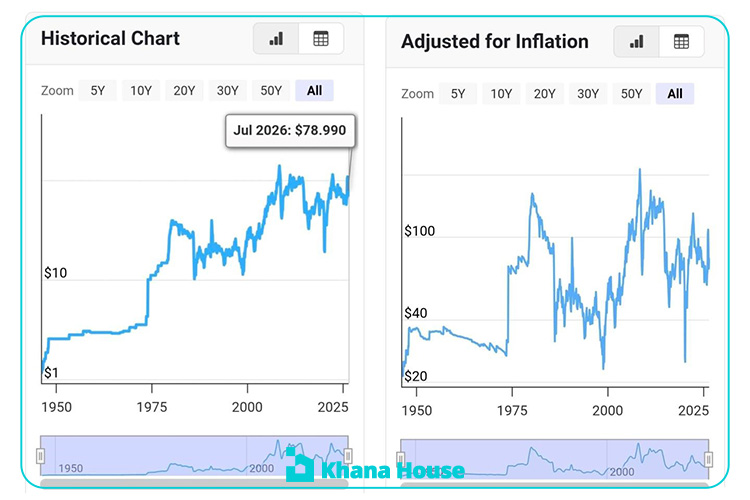
Why did global oil prices reach the equivalent of nearly $200 per barrel in real terms during Mahmoud Ahmadinejad’s presidency without direct military conflict, while today they struggle to remain above $100 despite heightened tensions involving Iran, the United States, and the Strait of Hormuz?
Structural Changes in the Global Oil Market
The answer lies in the changing structure of the global oil market and how investors assess geopolitical risk. In 2008, strong demand from China and India, limited supply, and speculative investment combined to drive oil prices to record highs.
Today, although geopolitical tensions and the risk of disruption in the Strait of Hormuz have created a risk premium, higher global oil production and weaker demand have prevented prices from reaching or sustaining 2008 levels.
Iran’s Political Economy Shapes Market Expectations
financial markets now place greater weight on structural economic fundamentals than on short-term geopolitical tensions. without meaningful reforms in Iran’s foreign and economic policies, the current situation could impose significant long-term costs on the country’s economy.
geopolitical tensions alone are no longer sufficient to drive sustained increases in oil prices, as global supply-demand dynamics remain the dominant factor in determining market trends.
You can read more about recent tensions in West Asia and its effect on global economy in our publications.