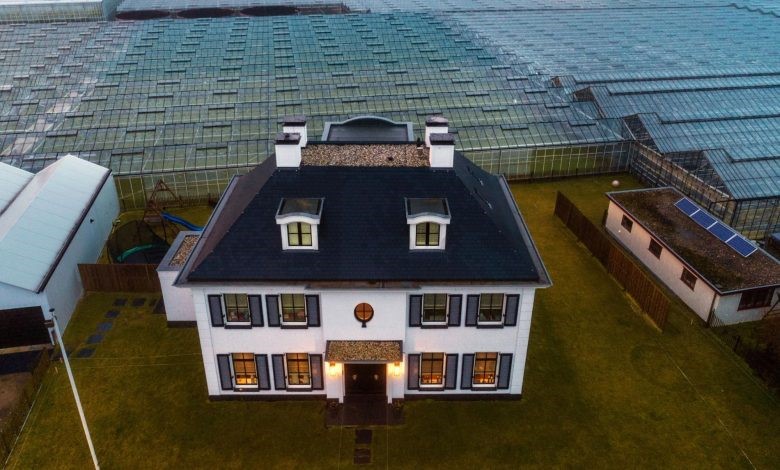
Presentation of the Home Farm agricultural plan and an examination of its advantages and disadvantages
Abstract
In today’s world, the effort to develop sustainable methods for agricultural production has gained increased importance due to global food security threats. Home-based agricultural production, as a creative and flexible solution that reduces costs and dependence on supply chains, can be studied as a significant issue in small- and medium-scale farming. In this context, the concept of a “productive home” serves as an independent unit that meets various family needs, including food and energy supply, producing surplus, and even offering products to the market.
In this article you read about:
Principles of a Productive Agricultural Home
Efficient use of all available indoor and outdoor spaces for cultivation.
Utilizing local, high-quality resources to support sustainability and local economy.
Employing advanced technologies like automated irrigation and renewable energy to boost productivity.
Promoting environmental protection, biodiversity, and health through diverse crop production.
Reducing agricultural waste by adopting sustainable farming practices.
Technologies Used
Small-scale agricultural production requires specialized technologies to optimize efficiency, reduce resource use, minimize labor, and improve product quality. Key technologies include vertical farming to maximize space, energy-efficient LED lighting for indoor plant growth, and automated irrigation systems that conserve water by delivering precise amounts to plants.
Advantages of Home Agricultural Production
Home-grown agriculture helps meet food needs, cut costs, reduce waste, promote health with organic produce, boost physical activity, and provide relaxation.
Challenges and Drawbacks and Solutions for Home Gardening
Challenges of home gardening include the need for knowledge and skills, high time and energy demands, and environmental issues like pests and weather. Solutions involve establishing neighborhood support farms to provide guidance, using small-scale technologies to save effort, and sharing knowledge through expert help and gardener networks.
This study was conducted at Islamic Zistshahr Strategic Studies Thinkthank by Behnam Nozari at the request of the Ministry of Agriculture Jihad in 2023.
To read more, click here