Iran’s AI Future: From Capacity Building to Economic Impact
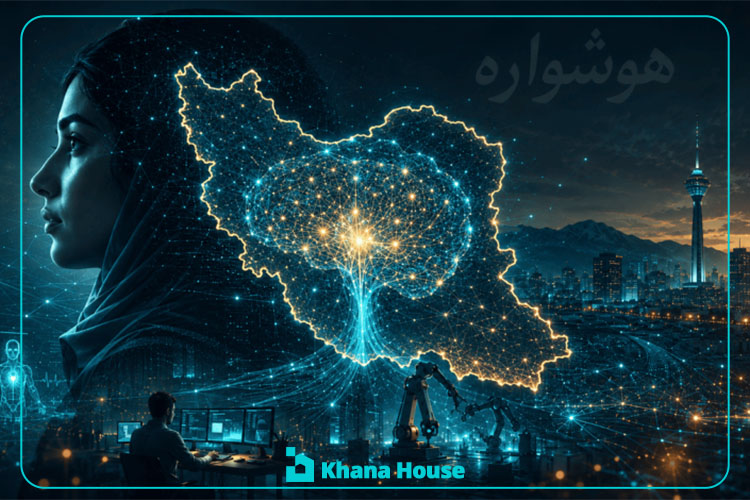
Recent discussions on AI in Iran have focused largely on scientific capacity, skilled professionals, technology companies, and infrastructure. However, the “Iran’s Future in the Age of AI” expert session highlighted a more fundamental question: to what extent have these capabilities translated into productivity gains, new markets, business-model transformation, and greater competitiveness for Iranian firms? The key challenge is therefore shifting from developing AI capacity to generating measurable returns from that capacity. The Iran AI Index 1404 also seeks to provide a multidimensional basis for setting priorities, coordinating stakeholders, and evaluating the outcomes of AI policies.
33% Growth in a Small AI Job Market
AI job opportunities grew 33% year-on-year, but still represent only 0.042% of total job postings. The figures show rising demand for AI skills, while highlighting Iran’s limited capacity to absorb and apply AI talent across the economy.
The Data Challenge Goes Beyond Building Datasets
Data is the foundation of Iran’s AI economy, making data governance, access, security, ownership, and value creation critical. While national policy requires stronger data infrastructure, businesses can already develop AI applications without waiting for perfectly organized datasets. The key is to improve data systems and AI adoption in parallel.
When Smartization Is Mistaken for AI Transformation
Iran’s challenge is not simply adopting AI tools, but transforming management, organizational processes, decision-making, and business models around the technology. Weak managerial readiness and organizational culture remain major barriers to AI adoption.
- AI adoption requires more than purchasing tools or adding “smart” features.
- Management quality, human capital, incentives, and organizational flexibility are part of the country’s AI absorption capacity.
Where Should Iran Position Itself in the AI Value Chain?
Iran needs to determine which parts of the AI value chain it can realistically compete in, given its limited infrastructure, capital, human resources, and industrial capacity. Clear prioritization is essential to prevent fragmented investment and duplication.
- Identify strategic areas for competitive advantage.
- Concentrate investment, regulation, and institutional capacity on selected priorities.
From an “AI Index” to an Action Plan
Iran has scientific capacity and a growing AI labor market, but the key challenge is converting these capabilities into economic value, productivity, and competitiveness. This requires better data governance, organizational transformation, and a clear national position in the AI value chain.
The central issue is therefore not a lack of discussion about AI, but the gap between having AI talent and building an economy capable of creating value from AI.
To read more, download full paper