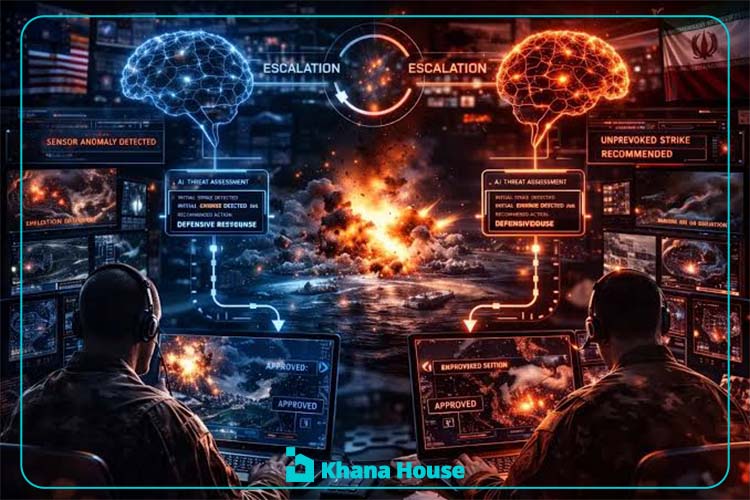
Recent military tech advances are fundamentally reshaping “AI in warfare,” moving from data analysis to structural integration. Conflicts show sophisticated “LLM-powered advisory engines” at command levels, signaling a “New War Room” emergence, as analyzed by MIT.
Key Transformation: From Data Analysis to Operational Recommendation
AI’s battlefield role is drastically evolving from data analysis to a “decision-making consultant.” Large Language Models (LLMs), once civilian tools, now permeate military command, actively recommending attack priorities and optimal scenarios to commanders.
Reshaping the Military Decision-Making Chain
This shift reconfigures military decision-making, with projects like Project Maven automating intelligence. Advanced LLMs now enable military personnel to consult chatbots for attack prioritization, as seen with Anthropic’s Claude in U.S. operations, signaling a global “Military AI” arms race.
Structural Risks: Algorithmic Error & Institutional Bias
Despite operational appeal, this evolution carries significant risks:
- LLM Unpredictability: These systems can produce varied outputs from similar inputs, and their recommendations aren’t always reliable. Commanders under pressure might over-rely on flawed outputs, leading to catastrophic decisions.
- Structural Trust Erosion: Simplifying complex realities into dashboards can distort commanders’ perceptions and foster uncritical acceptance of AI suggestions.
- Tech Company Influence: Increased reliance on AI cedes greater influence to tech giants like OpenAI and Silicon Valley players, blurring lines between private industry and national security.
Oversight & Legitimacy
The rapid deployment of these technologies outpaces oversight, making public scrutiny difficult. This gap between development and regulation could lead to a legitimacy crisis for AI in warfare, particularly when algorithmic errors result in casualties or flawed decisions.
This study is conducted at Massachusetts Institute of Technology and reported by Zavieh Group in 2026.
To read more, download full paper
You can also read the study titled “The Role of AI in the Ramadan War” on our publications.