In the contemporary economic landscape of Iran, export consortiums have transitioned from traditional mechanisms for capacity-pooling into vital instruments for systemic resilience and survival within global value chains. In an environment defined by severe external pressures and international sanctions, collective action is no longer merely a strategic preference; it has become an absolute imperative for commercial survival. An export consortium is characterized as an organized, collaborative mechanism among several independent firms-predominantly small and medium-sized enterprises (SMEs)-that collectively plan, finance, and execute strategies to enter and maintain a presence in international markets while retaining their individual legal and managerial autonomy.
Within this framework, members aggregate a wide array of complementary resources and capabilities, including market intelligence, distribution networks, international marketing efforts, quality management systems, logistics, and after-sales services. The primary objective of such collaboration is to distribute high fixed export costs and mitigate the multifaceted risks and complexities inherent in foreign trade. By merging financial, technical, informational, and experiential resources into a participatory, goal-oriented structure, these consortiums aim to optimize the export process, increase collective bargaining power, and enhance global competitiveness through economies of scale and inter-firm cooperation.
From an analytical perspective, the export consortium serves as an institutional response to the systemic barriers faced by micro and small exporters. These barriers include severe resource constraints, unfamiliarity with complex international standards and customs regulations, and a chronic lack of logistical infrastructure. In industrial development literature, a successful consortium is typically defined by several key features: a common export objective, specified financial or service contributions from its members, and a robust governance structure such as an export committee or an Export Management Company (EMC). Furthermore, it requires transparent rules for the distribution of benefits and costs, alongside a functional dispute resolution mechanism.
Consortiums can be categorized as “promotional,” focusing on branding and market research, or “operational,” which handle direct negotiations, contracting, and joint invoicing. They may also be “horizontal,” involving producers at the same level of an industry, or “vertical,” integrating different stages of the value chain to offer a complete export package. A critical distinction in the academic definition is that an export consortium is not synonymous with a “cartel”; its fundamental purpose is to increase efficiency through synergy and the reduction of transaction costs, rather than manipulating prices or restricting domestic competition.
Historical context shows that this model emerged successfully in post-war Europe, particularly in Italy and West Germany, where small manufacturing firms in “Industrial Districts” pooled resources to overcome the complexities of exporting. In Iran, the phenomenon has a complex history, moving from the oil and banking consortiums of the mid-20th century to the “export groups” of the 1990s and 2000s. However, since the 2010s, Iranian consortiums have increasingly adopted a character of “resilience”. Sanctions and supply chain disruptions have driven firms toward alliances not just for project execution, but for the “indigenization” of strategic equipment and the pooling of technological knowledge to bridge R&D gaps. Thus, the consortium has evolved from a tool for pooling executive capacity into an instrument for managing knowledge and the entire value chain.

Failure Factors of Export Consortiums
Despite their potential, consortiums in Iran face significant failure factors stemming from infrastructural constraints and the impact of sanctions on export support services. Theoretically, a consortium creates a competitive advantage by achieving economies of scale and distributing fixed costs. However, in Iran, structural bottlenecks-such as international payment restrictions, shipping insurance hurdles, and limited access to global maritime lines-often prevent these scale efficiencies from translating into real advantages. Issues like money transfer restrictions and a multiplicity of non-aligned standards pose significant challenges.
The “receivability of funds” is as vital as the sale itself, yet banking restrictions often force consortiums into cash-only operations, reducing their attractiveness to international buyers who require flexible payment modalities. Without access to professional risk management tools like export credit insurance, consortiums are often forced to target low-tier markets. Furthermore, logistical failures, fluctuating freight costs, and weak corporate governance often lead to “free-riding,” where passive members exploit the group’s reputation without contributing. Macroeconomic instability and currency shocks also make long-term collective investments fragile, often leading members to prioritize short-term individual gains over collective commitments.
Consortiums under Sanctions and War
The success of a consortium rests on three pillars: stringent internal governance, access to standard financial/logistical infrastructure, and technical capacity for product uniformity. Sanctions undermine these pillars by functioning as a sharp increase in transaction costs across banking, insurance, and logistics. While sanctions represent “calculable uncertainty,” the advent of war elevates risks to “fundamental uncertainty,” paralyzing trade and destroying infrastructure. In a wartime economy, consortiums face triple pressure regarding deliverability, settlement, and internal coordination, which can lead to systemic collapse without pre-designed risk-sharing mechanisms.
Proposed Methodology
- Reconceptualizing the Consortium: Transitioning from the classic model toward a “Resilient Consortium” or “Anti-Sanction Consortium.” This model operates under a “continuous crisis” assumption and integrates experts in finance, law, IT, and logistics alongside manufacturers.
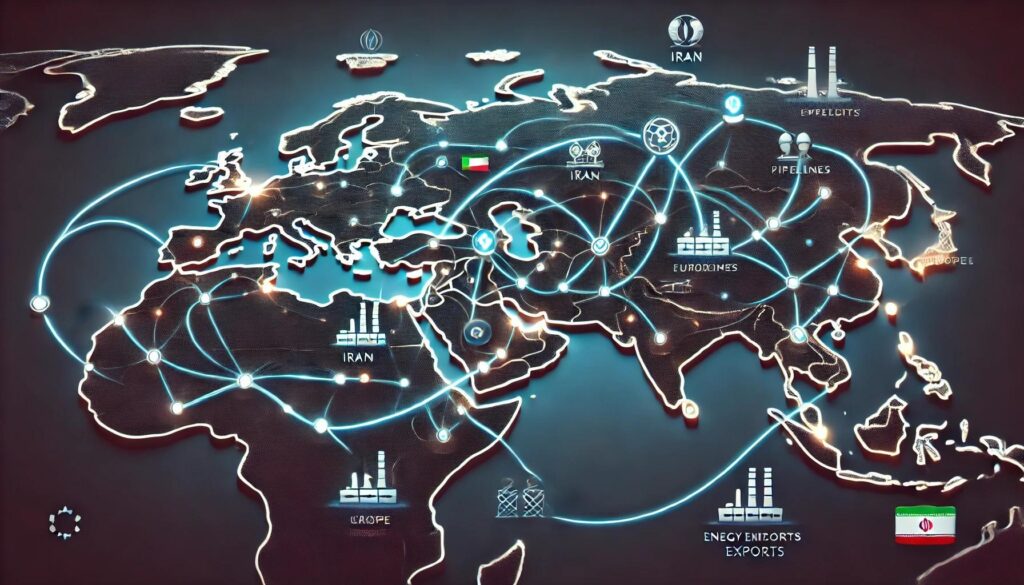
- Strategic Diversification: Acting as multi-layered insurance, diversifying target markets (e.g., China, Iraq, Turkey), logistical routes (sea, land, air), and financial mechanisms (Barter, CNY, USD) ensures that the total portfolio risk is significantly lower than the sum of its components.
- Leveraging the Iranian Diaspora: Utilizing the global network of millions of Iranian professionals to bridge the gap between the domestic origin and global markets.
- Business Model Innovation and Digitalization: Re-inventing the business model via digital exports (software, digital content, technical consulting) which are virtually “sanction-proof”.
- Common Standards: Unified quality control systems act as the backbone of collective trust, bridging the gap between domestic capacity and international requirements and providing a reliable image against regional competitors.
This policy note is written by Alireza Najafli i 2026.