Tannaz Karimi

Digital Dissection of the Beijing Model

Digital Dissection of the Beijing Model

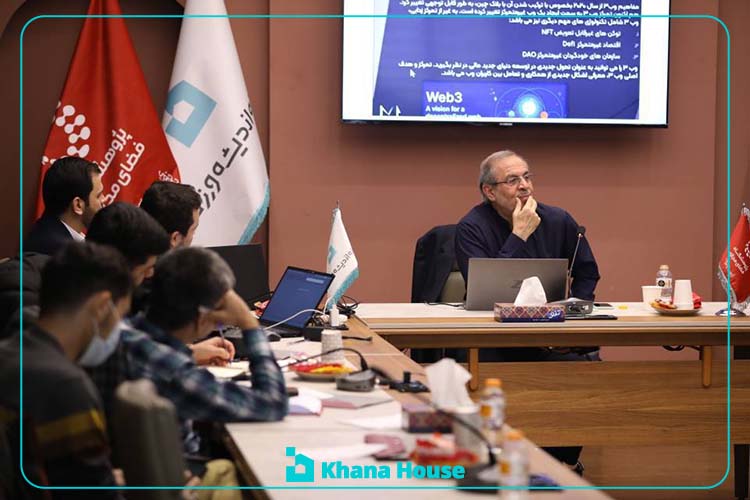
 Managing domestic platforms to safeguard security and data integrity is an essential priority. In this regard, China’s long experience in steering cyberspace offers an instructive model. At a meeting titled “Digital Dissection of the Beijing Model” held at KHANA, the contours of China’s digital governance framework were examined. The session brought together thinkers and officials

Digital Dissection of the Beijing Model Read More »

Media Management in Crisis

Media Management in Crisis and War Conditions

Media management in crisis and war conditions has become a decisive factor in national security, particularly in the era of cognitive warfare and psychological operations. Over the past decades, global experiences show that states capable of controlling narratives, coordinating communication structures, and responding rapidly to misinformation have been more successful in protecting national interests and

Media Management in Crisis and War Conditions Read More »

Regulation of Artificial Intelligence in Iran

Regulation of Artificial Intelligence in Iran

Regulation of artificial intelligence has become a critical policy issue as AI technologies rapidly transform governance, industry, and society. The growing deployment of AI in sectors such as healthcare, transportation, finance, and public administration has intensified the need for comprehensive legal frameworks to address accountability, transparency, data protection, and ethical risks. Legal and Ethical Challenges

Regulation of Artificial Intelligence in Iran Read More »

Inflation in Iran

Inflation in Iran: Monetary Growth and Inflationary Shocks

Inflation in Iran has been a persistent macroeconomic challenge, strongly linked to monetary growth, fiscal imbalances, and structural economic weaknesses. In macroeconomic theory, long-term inflation is closely correlated with money supply growth. In Iran, where liquidity expansion serves as a key monetary indicator, this relationship is particularly significant. This study examines inflation trends and major

Inflation in Iran: Monetary Growth and Inflationary Shocks Read More »

Artificial Intelligence and Religious Democracy

Artificial Intelligence and Religious Democracy

The relationship between artificial intelligence and religious democracy is becoming increasingly significant as AI transforms political, economic, and social systems. Within Iran’s model of religious democracy—where Islamic principles are integrated with democratic participation—AI presents both major opportunities and complex governance risks. This study by the Parliamentary Research Center analyzes how artificial intelligence influences core values

Artificial Intelligence and Religious Democracy Read More »

Hidden U.S. and Pakistan Strategic Partnership

Hidden U.S. and Pakistan Strategic Partnership

The hidden U.S.–Pakistan strategic partnership has emerged as a significant factor reshaping geopolitical dynamics in South and West Asia. Despite periods of diplomatic tension, Washington and Islamabad appear to be moving toward a pragmatic and multidimensional alignment driven by shared security, economic, and strategic interests. This evolving cooperation extends beyond bilateral relations and directly influences

Hidden U.S. and Pakistan Strategic Partnership Read More »

Iran china Western Centric Foreign Policy

Iran and China Relations: Rethinking Western Centric Foreign Policy

The conference critically examined Iran’s long-standing Western-oriented foreign policy, arguing that it has marginalized alternative partnerships, particularly with China and East Asia. Speakers stressed that without investing in public diplomacy, tourism, academic cooperation, and a shared civilizational narrative, Iran–China relations will remain transactional rather than strategic. The Silk Road as a Civilizational Corridor, Not Just

Iran and China Relations: Rethinking Western Centric Foreign Policy Read More »

Strait of Hormuz

Legal Capacities for Iran’s Active Engagement in the Strait of Hormuz

The Strait of Hormuz is a vital global energy corridor through which nearly one-fifth of the world’s oil and significant LNG volumes pass daily. Any disruption directly impacts global energy prices and major economies, making the Strait a critical geopolitical leverage point for Iran. Research Rationale and Objectives Iran’s confrontation with the U.S.-led order is

Legal Capacities for Iran’s Active Engagement in the Strait of Hormuz Read More »

Iran Israel post ceasefire scenarios 2026

Iran and Israel post ceasefire scenarios 2026

Relations between the Islamic Republic of Iran and the Zionist regime have evolved into one of the most sensitive and complex geopolitical challenges in recent years, shaped by historical animosities, regional rivalries, and the involvement of extra-regional powers. The failed Israeli attack on Iran on June 13, 2025, followed by a fragile, unofficial ceasefire after

Iran and Israel post ceasefire scenarios 2026 Read More »